
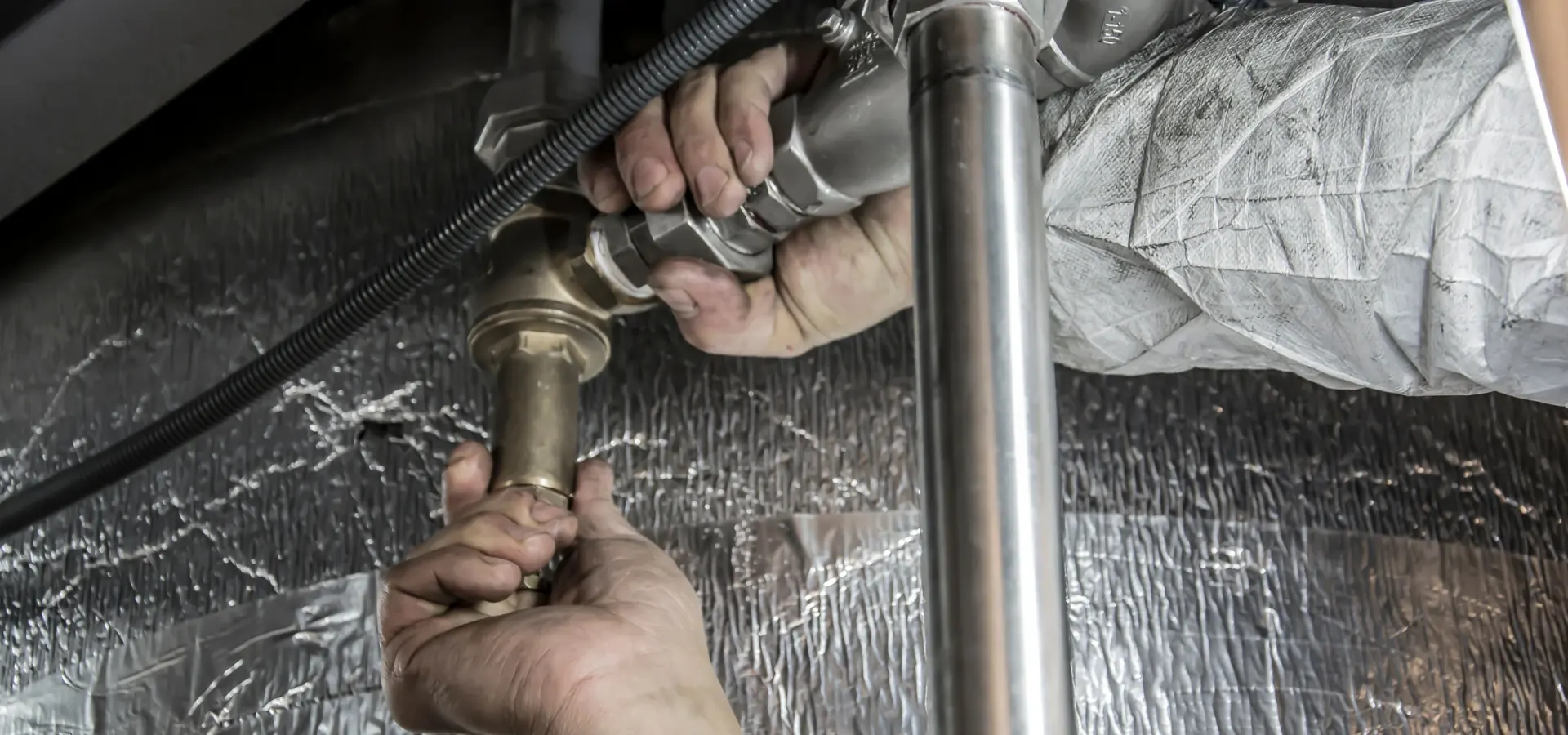
When a leaking water heater is an emergency
A water heater that is leaking in Covington, KY is an emergency once water is pooling, running from the bottom of the tank, or spreading toward outlets and appliances. Our 24/7 emergency line is open for exactly this. While you wait, close the cold water valve on the pipe above the tank and switch the heater off, at the breaker for electric units or at the gas control for gas units.
If you smell gas, leave the building first. Call your gas utility or 911 from outside, and only then call a plumber.
What the symptom usually points to
Most calls start with one of these six complaints, and each has a short list of likely causes.
No hot water at all
On a gas unit, look at a pilot that went out, a worn thermocouple or a dead gas valve. On an electric unit, suspect a tripped breaker, a high-limit reset switch or both elements burned out.
Warm, then cold fast
A cracked dip tube sends cold supply water straight to the outlet. One failed upper or lower element on an electric tank gives the same short supply.
Water too hot
A stuck thermostat or a bad gas control keeps heating past the setpoint. The DOE suggests 120 F as a safe and efficient setting.
Rumbling or popping
Sediment on the tank bottom traps steam bubbles under it. Flushing helps early on, but heavy buildup can crack the lining over time.
Rusty hot water only
If cold taps run clear and hot taps run brown, the tank interior is corroding. The anode rod may be spent, or the tank may be near the end.
Dripping pipe on the side
That pipe is the discharge line from the temperature and pressure relief valve. A steady drip means the valve is worn or the system pressure is running too high.
Is the water from the tank or from a fitting?
Dry the heater with a towel, then press a fresh paper towel to each suspect spot. Wet at the pipe connections on top, the drain valve, or the relief valve points to a part that can be replaced. Wet that returns from under the jacket, or a steady puddle from the base, usually means the tank wall itself has failed.
The EPA says household leaks waste more than 9,300 gallons a year on average, and a slow tank leak often goes unseen behind a utility closet door. Check the floor beside the heater once a month. If water seems to come from somewhere else in the house, a leak detection visit can trace it.
Water on the floor around the tank?
Shut off the supply, then call our 24/7 line and we will sort out repair or replacement.
Where the leak shows up and what it means
This is the first thing a plumber checks when you describe wet floor around a tank.
| Where the water appears | Likely source | Usually fixable? |
|---|---|---|
| Top of the tank at the pipes | Corroded or loose inlet and outlet connectors | Often yes |
| Pipe running down the side | Relief valve weeping, or pressure too high | Often yes |
| Panel on an electric unit | Failed gasket on a heating element | Often yes |
| Drain valve near the floor | Worn valve seat or a cracked plastic valve | Often yes |
| Base of tank, steady | Corroded tank wall or split seam | No, tank replacement |
| Damp ring, no drip | Condensation on cold metal | No repair needed |
Gas, electric and hybrid units fail in different places
The type of heater decides which parts get tested first.
Gas storage tanks
Burner, pilot assembly, thermocouple, gas control valve and venting are the common suspects. A blocked flue is a safety problem, not just a comfort one, so a unit that keeps shutting itself off gets a vent check.
Electric storage tanks
Two heating elements and two thermostats share the work, so one dead element often leaves you with a little warm water. A plumber tests resistance at each element and checks the reset button before pulling anything.
Hybrid heat pump units
These add a compressor, fan, condensate drain and electronic controls on top of the tank. A clogged condensate line or error code is often a quick fix, while sealed-system faults can cost more than they are worth on an older unit.
Repair or replace: the age test
The DOE puts storage tank life at 10 to 15 years, so age shapes the decision more than any single symptom.
| Situation | Repair makes sense | Replacement makes sense |
|---|---|---|
| Under about 8 years old | Failed element, thermostat, valve or thermocouple | Only if the tank wall has leaked |
| 10 to 15 years old | Single cheap part, no rust at the base | Repeat repairs, rusty water, or any base leak |
| Past 15 years | Short-term fix only if you are planning a later swap | Usually the better use of money |
| Tank leaks from the body | Not possible | Always |
No hot water: a quick check before you call
Look for the simple causes first. On an electric heater, check the double-pole breaker and press the red reset button on the upper thermostat once. On a gas heater, see whether the pilot is lit and whether the gas valve on the supply line is open.
If a reset trips again right away, stop. That pattern points to a shorted element or a wiring fault, and repeated resetting only masks it. Our 24/7 line takes those calls at night and on weekends, and same-day appointments are available when the schedule allows.
What changes the price of a water heater repair
These are the real cost drivers, and we explain which apply to your unit before any work begins.
Older Covington housing and what it means for the tank
Covington counted 20,576 housing units in 2020, and its population peaked at 65,252 in 1930. That means many homes in the historic districts, including Mainstrasse Village, have had several water heaters over the decades, often in basements or tight closets. Ask the plumber to look at the venting and the supply shutoff valve while the heater is open, because those older rooms may carry decades-old connections.
Northern Kentucky Water District serves 99 percent of Kenton County households, so most heaters here run on NKWD water. The sediment your tank collects depends on your own supply, so test your tap and ask NKWD for its annual water quality report instead of guessing. Neighbors in Fort Wright and other nearby towns can also call the same 24/7 line.
When the repair bill says replace
A tank with a failed wall cannot be patched, and a tank in its last years may not justify a new gas valve. In those cases, a full replacement takes less total money than repairing and then replacing in a few months. If you are thinking about going tankless instead, read about tankless units and their flush needs.
Changing the heater type or relocating it can involve a plumbing permit, and permit rules vary. Ask the Kentucky Division of Plumbing or the local plumbing inspector, or let us explain when you call. For planned swaps, see water heater installation.
Frequently asked questions
Yes. Our 24/7 emergency line answers at any hour, including weekends and holidays, and we send a licensed plumber for active tank leaks, gas smells that have been cleared by your gas utility, and no-hot-water calls. Shut the cold supply and power or gas first, then call.
The bottom can leak from a worn drain valve, a failed relief valve line, or a corroded tank. A drain valve is a cheap fix. A tank that weeps from the base or seam cannot be repaired and needs replacement.
It depends on the part that failed, access to the unit, the age of the tank and the hour of the call. You get a clear price before work starts, so you can compare repair against replacement.
A worn thermocouple is the usual cause, followed by a draft or blocked flue and a weak gas valve. If it relights and fails again, have it checked rather than relighting repeatedly.
The DOE puts tank life at 10 to 15 years. At 12, a small part like an element is often worth fixing, but any leak from the tank body means replace.
Tenants should tell the landlord or manager first, since the heater usually belongs to the property. A manager can call our line, authorize the work, and arrange tenant access, and we explain findings in plain terms.
Yes for common faults like clogged condensate drains, fans and element failures. Sealed refrigerant faults on older units are often better handled by replacement, and we say so up front.