
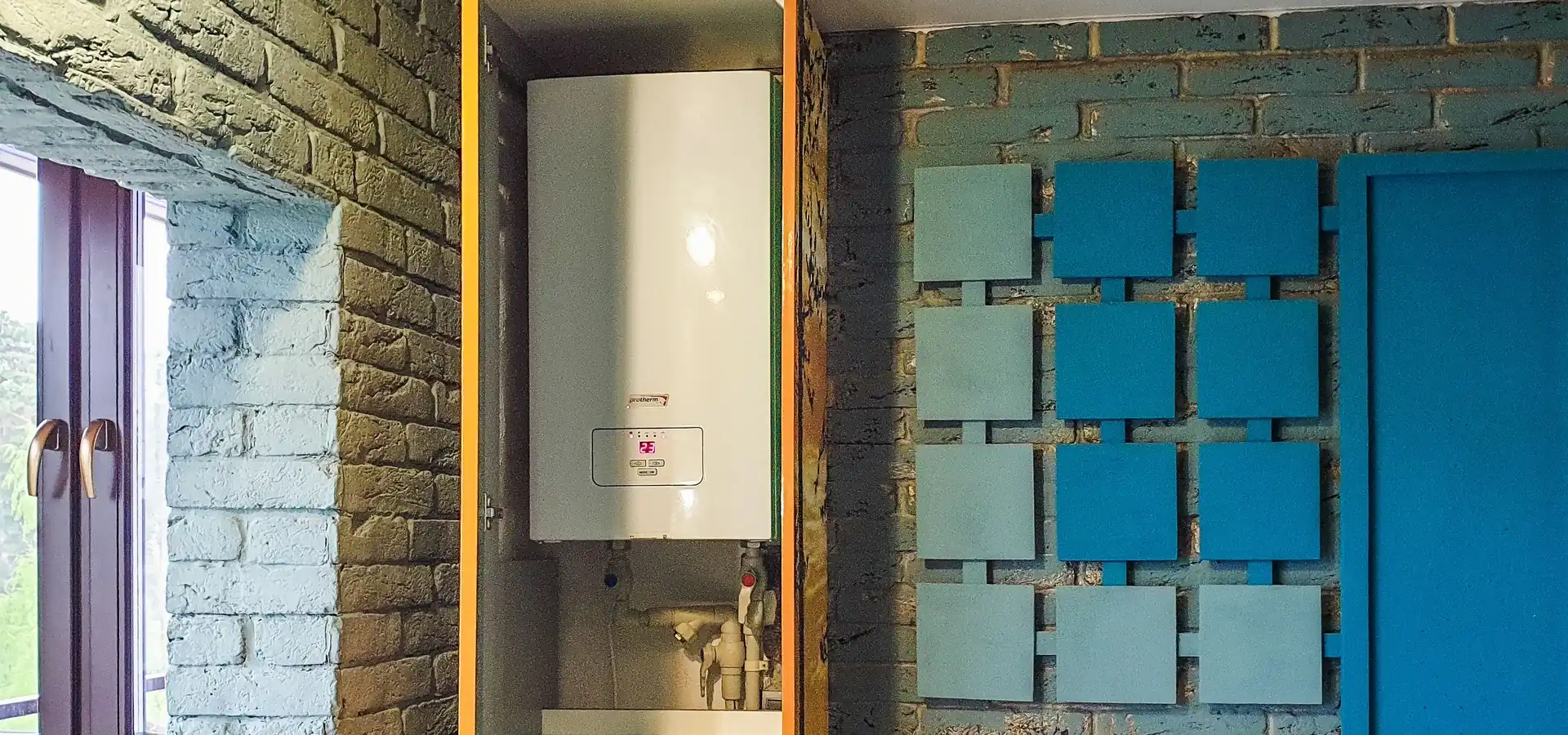
What a good install gets right before the tank arrives
The usual signs that an install is coming are a heater past 10 years, a capacity that no longer fits a household, or a remodel that moves the utility room. Whatever the trigger, the work comes down to four questions: where it sits, how it vents, what supplies it, and how it drains if something goes wrong.
Answering those on paper first saves a second visit. Water heater installation in Covington, KY is straightforward in an open basement and slower in a tight closet or a converted attic space. We ask for photos of the existing setup if you can describe it, and for the fuel type, tank size, and approximate age.
How installation day runs
Most installs follow this order, with variations by fuel type.
- 1
Prepare the space
The area is cleared, the old connections are shut off, and any pan, platform or drain path is set where the layout allows.
- 2
Set and connect water
The tank is placed level, with shutoff valves on the supply, flexible or rigid connectors on both pipes, and a relief valve piped toward a safe drain point.
- 3
Connect fuel and vent
Gas units get a gas connection, sediment trap where applicable, and a checked flue. Electric units get the correct circuit and wire connections.
- 4
Fill, test and set
The tank fills with air bled from the lines, then is fired up, checked for leaks, and set to 120 F, the DOE energy-saving suggestion, unless you want it different.
The parts that sit around the heater
A new tank is only one piece. These fittings are what keep it safe and serviceable.
Temperature and pressure relief valve
This valve opens if temperature or pressure climbs too high. Its discharge pipe must run to a safe spot and never be capped.
Shutoff valves
A working cold-side shutoff lets you close the supply fast during a leak or service call.
Drain pan or floor drain path
A pan with a drain line catches slow leaks and gives a failed tank somewhere to go besides the floor.
Dielectric or brass connectors
These slow corrosion where steel tank fittings meet copper pipe.
Expansion tank
Where the system needs it, this small tank absorbs the pressure rise when cold water heats. More in the next section.
Ready to schedule?
Call and describe the room, the fuel and what you want. We confirm scope and price before any work starts.
Do you need an expansion tank?
Water expands as it heats, and in a closed system it has nowhere to go. A closed system can result from a backflow preventer, a check valve or a pressure-reducing valve on the incoming line. The extra pressure shows up as a dripping relief valve, banging pipes or fixtures that wear out early.
An expansion tank is a small pressurized vessel that takes up that surge, and it should be set to match your house pressure. A plumber can check your incoming pressure with a gauge on a hose bib and tell you whether one is right for your setup. If your relief valve keeps weeping on an existing heater, water heater repair often starts with that same pressure test.
Venting: where exhaust and combustion air go
A gas water heater makes carbon monoxide, and venting is what sends it outside. Atmospheric vent units rely on hot gases rising through a flue, power vent units use a fan to push exhaust through a sidewall pipe, and direct vent units draw air in and send exhaust out through sealed pipes. Which one you can use depends on your chimney, your wall access and the room.
Old flue pipe can corrode, sag or run uphill, so we inspect it instead of reusing it without a look. A unit that backdrafts can fill the room with exhaust, and a carbon monoxide alarm near the heater is cheap protection. Combustion air matters too, since a heater in a sealed closet may starve for oxygen.
Gas line safety comes first
If you smell gas at any time, leave the building immediately, then call your gas utility or 911 from outside. Do not turn on lights, use a lighter, or call a plumber first. We only connect or disconnect gas appliances after the area is confirmed safe, and a new connection is leak-tested before the heater is lit.
Choosing where the heater goes
The location affects cost, access for later service, and whether a permit conversation is needed.
| Location | Works well when | Watch for |
|---|---|---|
| Same spot as the old unit | Existing venting, supply and drain are sound | Aging flue, no pan or drain path |
| Basement away from the old spot | Open space and a floor drain are nearby | New pipe runs, venting and permit |
| Garage or utility room | Room is heated and protected from impact | Freezing cold snaps, combustion air |
| Attic or closet | No other practical option | Access for service, leak damage below |
| Outdoor-rated unit | Interior space is not available | Winter freeze protection |
Permits and inspection
The Kentucky Division of Plumbing administers the state plumbing law and the Kentucky State Plumbing Code under KRS 318.130. Its homeowner guidance lists new installations and moving fixtures among the work that needs a permit, and work covered by concrete, walls or underground must be inspected before it is covered. Permit rules vary, so ask the Division of Plumbing or the local plumbing inspector about your job.
A heater swapped in the same spot differs from one relocated across the basement, which means new supply, drain and venting runs. When a permit applies, the inspection normally follows the install, and pressure tests on new pipe are held for 15 minutes. You can verify any Kentucky plumber's license through the Division of Plumbing at dhbc.ky.gov/plb.
What affects the cost of installing a water heater
The price depends on your house, not a catalog. These items move it most.
Installing in Covington's older homes
Covington's housing includes buildings in the Mainstrasse Village historic district, which is 91 acres of Federal, Victorian, Italianate and Queen Anne styles, and neighborhoods like Old Seminary Square and Peaselburg. Many older buildings have narrow basement stairs, low ceilings and legacy flue chases, so measure the route before the tank is ordered. A 50-gallon tank needs a path wide enough to carry and tilt it.
Covington counted 20,576 housing units in 2020, and a good share predate modern venting standards. If you are adding a bathroom or finishing a basement and a heater has to move, ask us about the whole plan, including new plumbing installation. A neighboring-town homeowner in Fort Mitchell can call the same line.
Tankless as an alternative
If you want continuous hot water and a smaller footprint, a tankless unit changes the installation list: bigger gas lines or heavier electrical service, and often new venting. A tank installed after a failure is covered on the replacement page as well.
Frequently asked questions
A same-spot tank swap often fits within a day, while a relocation, fuel change or tankless conversion takes longer because of new pipe, venting or electrical work. We give you a timing estimate before work begins.
Permit rules vary. The Kentucky Division of Plumbing lists new installations and moving fixtures among permitted work, so ask the Division of Plumbing or the local plumbing inspector about your exact job.
It depends on whether your water system is closed by a backflow preventer, check valve or pressure-reducing valve. A pressure test on your supply tells us.
The price depends on the heater type, location, venting, gas or electric capacity, and extras like a pan or expansion tank. You get a clear price before work starts.
Often yes. The new spot needs water, drain, fuel and venting access, plus room for service. Moving it is the case most likely to bring in a permit and inspection.
Yes. A property manager can call to arrange the scope, approve the price and coordinate tenant access. We explain what was done in plain terms afterward.
Gas connections, venting and relief piping all carry risk when done wrong, including leaks and carbon monoxide. If you ever smell gas, leave the building and call your gas utility or 911 first.