
When a line backs up and a snake did not hold
Hydro jetting is a drain-clearing method that pushes water through a flexible hose at high pressure, using a nozzle that blasts forward and backward to strip buildup off the pipe wall. A sewer or drain line in Covington, KY can fail on a Saturday night as easily as a Tuesday, and our 24/7 line is open for that. Until a plumber arrives, stop using water, keep the area around any overflow clear and do not pour chemicals into the drain.
Jetting is not always the first move. A plumber usually starts with a cable or a camera, and picks jetting when the problem is a coating rather than a single lump.
Slow every few weeks, gurgling after the cable, roots again
These are the usual reasons people end up asking about jetting.
Cleared, then slow again
A cable opens a hole through grease. The coating on the walls stays, and the pipe silts back up in a month or two.
Gurgling at the toilet
Air displaced by a narrowed line burps up through the nearest trap, especially after laundry drains.
Roots in the line
Fine root hairs enter through joints and spread like a mat. Cutting them with a blade is quick, but jetting also washes out the debris they catch.
Rough, scaly pipe
Old iron can build rust nodules inside. They snag paper and grease, and they need scouring, not poking.
A restaurant or shared line
Kitchens and multi-unit buildings send fat down the same pipe all day. Scheduled jetting stops it from becoming a daily event.
Hydro jetting, explained plainly
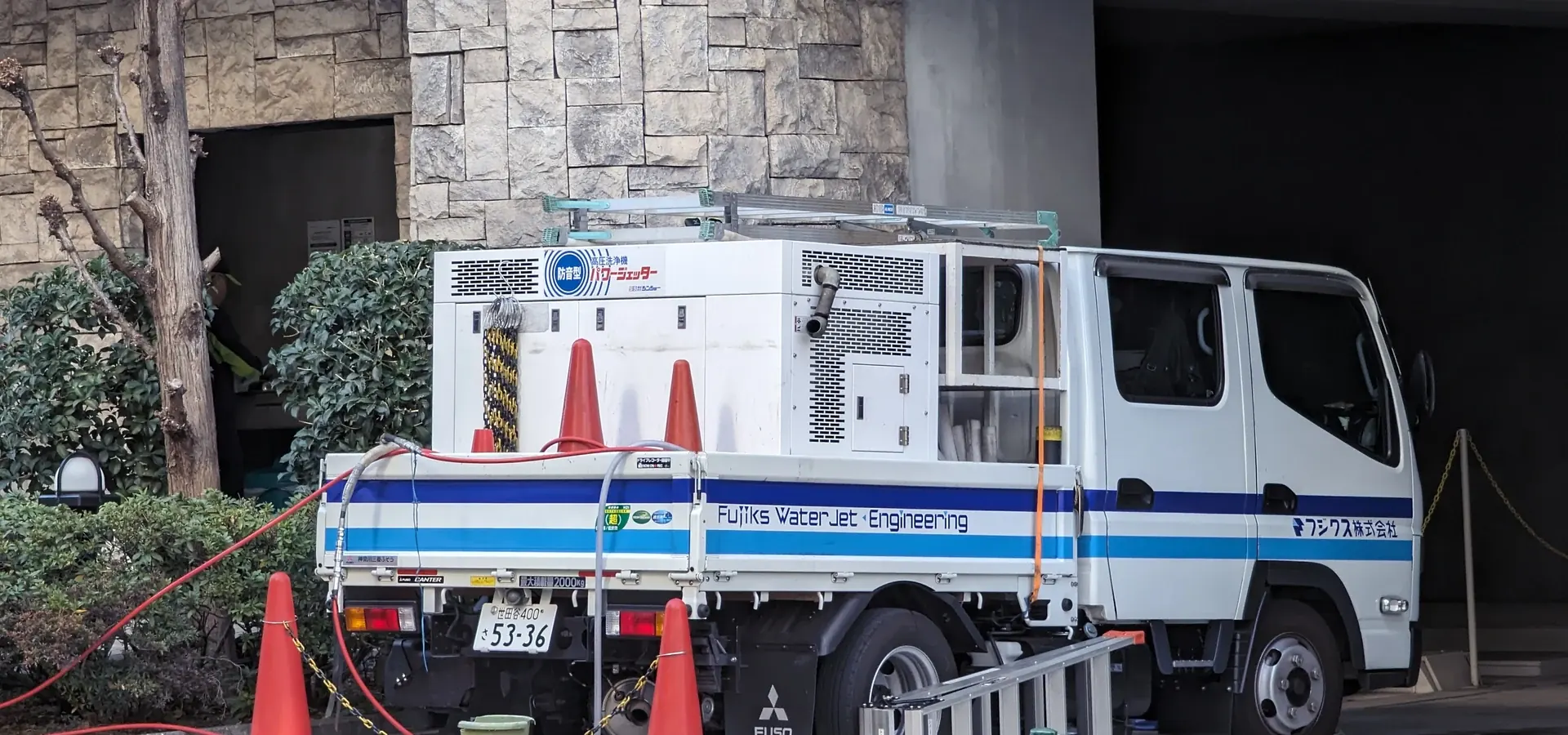
A jetting machine is a pump on a truck or trailer that feeds water to a hose with a steel nozzle. Residential nozzles run at high pressure, and each has several jets pointing backward, which pull the hose forward through the pipe while the water cuts. A forward-facing jet breaks through the clog, then the rear jets scrub the wall on the way back.
That wall scrubbing is the point. A rotating cable cuts a channel. A jet restores most of the original bore, so the same line carries more flow and tends to stay clear longer. On a 4-inch drain, that can be the difference between a line that handles a washer and a shower at once and one that backs up on the second load.
Same clog, third time?
Call and describe how often it returns. A plumber can tell you whether jetting fits.
Jetting, snaking or neither?
How a plumber weighs the options for a given blockage.
| Situation | Better choice | Reason |
|---|---|---|
| Single hair or paper clog | Cable | Cheaper and fast, no coating to remove |
| Grease lining a kitchen line | Jetting | Water melts and flushes the film |
| Fine roots in a clay or cast iron line | Cutter, then jet | Roots regrow unless debris is washed out |
| Pipe is cracked, offset or collapsed | Neither, camera first | Pressure can worsen a broken pipe |
| Unknown cause, repeat clogs | Camera, then decide | A picture beats a guess |
When jetting is the wrong tool
High-pressure water in a broken pipe does damage. If a clay or cast iron line has a cracked section, a dropped joint or an area that has settled into a belly, a jet can enlarge the break or wash soil into the line. That is why plumbers often put a camera in first. A sewer camera inspection shows whether the pipe is sound enough to take pressure.
Some pipes should not be jetted at all, such as thin, brittle old lines, those with failed lining, or lines that have already been partly repaired. If the camera shows a collapse or a break, the fix becomes sewer line repair rather than cleaning. Telling you that plainly is part of the job.
What Covington's combined sewer means for a jetted line
Sanitation District No. 1 (SD1) says older areas such as Covington and Newport have a combined sewer, one pipe carrying wastewater and storm water together. In heavy rain, overflows from that system can back up basements. Jetting your own line does not change what happens in the street, so a house that backs up only during storms may have a capacity issue, not a clog.
The line between you and SD1 matters too. As SD1 describes it, the owner owns and maintains the lateral from the building plumbing to the connection with the district's sewer. Jetting the private lateral is the owner's job. If the camera shows a defect in a public sewer under the roadway, you may need to call SD1 at 859-578-7450, because that part is not yours to repair.
Yard drains, downspout lines and storm drains
Not every clogged pipe carries toilet water. Yard drains, driveway trench drains and buried downspout lines run leaves, grit and silt, and they plug with a dense sludge that a cable barely moves. A jet nozzle breaks that sludge up and flushes it to the outlet.
Where the water goes next matters. A private storm line that ties into a system managed by SD1 is a different situation from one that drains to your own yard, so ask the plumber about the discharge point before jetting. If you are not sure whose pipe is backing up, call the 24/7 line and describe where the water pools.
We run these calls in places like Taylor Mill, where an eastern strip of the city borders the Licking River and low yard drains can sit near wet ground.
How a jetting visit usually goes
Preparation is half of the work.
- 1
Locate the access
The plumber finds a cleanout, removes a toilet or opens a trap so the hose can enter the line safely.
- 2
Camera or test run
A short camera look checks for a break before pressure goes in. Skip this step and you risk jetting a damaged pipe.
- 3
Jet in passes
The nozzle goes in slowly, working back and forth through the buildup. Water and debris drain to the sewer, so the line has to be able to carry it.
- 4
Confirm flow
Running water at fixtures confirms the line is clear. A final camera pass shows the wall afterward.
What to do if the sewer is backing up into the house right now
Do these things while the plumber is on the way.
Stop all water
No showers, laundry or flushing. Even a gallon down a blocked line has to go somewhere.
Protect electrical areas
Keep out of standing water near panels, furnaces and outlets.
Avoid the water itself
Backup water can carry bacteria. Wear boots and gloves if you must move belongings, and wash well afterward.
Photograph the damage
Pictures of the water level and affected items help if you file an insurance claim later.
What changes the cost of jetting
A clear price before work starts means the number comes first. These are the reasons it moves.
Frequently asked questions
Yes. The 24/7 line is open all night and on weekends, and a licensed plumber can be sent when a line is backing up. Tell the dispatcher what is overflowing and stop using water while you wait.
That pattern usually means a coating of grease, scale or roots is still on the pipe wall after each cable pass. A camera look followed by jetting treats the cause, while repeated snaking only treats the symptom.
It depends on line length, pipe size, how much buildup there is, access and the time of day. You get a clear price before work starts, along with what is included.
On sound pipe, pressure used by a trained plumber does not. On cracked, collapsed or very brittle pipe it can, which is why a camera check often comes first and why jetting is sometimes ruled out.
It is better for grease, scale and roots because it cleans the wall. For a simple hair or paper clog a cable is faster. See drain cleaning for how that choice is made on household fixtures.
Call the 24/7 line and describe the building. A plumber can check whether the issue is the unit or the shared line, which affects who is responsible under the lease.
Yes. Pipes narrow gradually from grease and mineral scale, so water seems to slow without a sudden blockage. A camera shows the buildup, and if it is thick, sewer line cleaning with a jet restores flow.