
A stopped drain at 10 p.m. does not have to wait for morning
A sink full of gray water or a tub that will not empty is a real problem, and our 24/7 line is staffed for it. While you wait for the plumber, stop adding water: no flushing, no dishwasher, no laundry. Every gallon you send down a blocked line has to go somewhere, and usually that is your floor.
Skip the bottle of drain opener. Caustic liquids sit on top of a standing clog, burn through skin if they splash, and leave the plumber working in a pipe full of chemical water. Lift out whatever you can reach by hand, put a towel at the base of the fixture, and keep children and pets away from the standing water.
Which drain is actually clogged?
The pattern of what is slow tells the plumber where to put the cable.
One fixture slow
A single sink or tub that drains slowly has a clog in its own trap or short branch. This is the simplest and cheapest case to clear.
Two fixtures on one wall
A bathroom sink and tub that slow together share a branch line. The blockage sits past both traps, often 10 to 25 feet along the pipe.
Gurgling after a flush
Air pushed through a partly blocked line bubbles up through the nearest trap. It is a warning that the clog is growing.
Lowest drain overflows
If the basement floor drain or a basement shower fills when you run the washer upstairs, the blockage is probably deeper than one fixture. Read the sewer line cleaning page for that case.
Snaking or jetting: how the plumber chooses
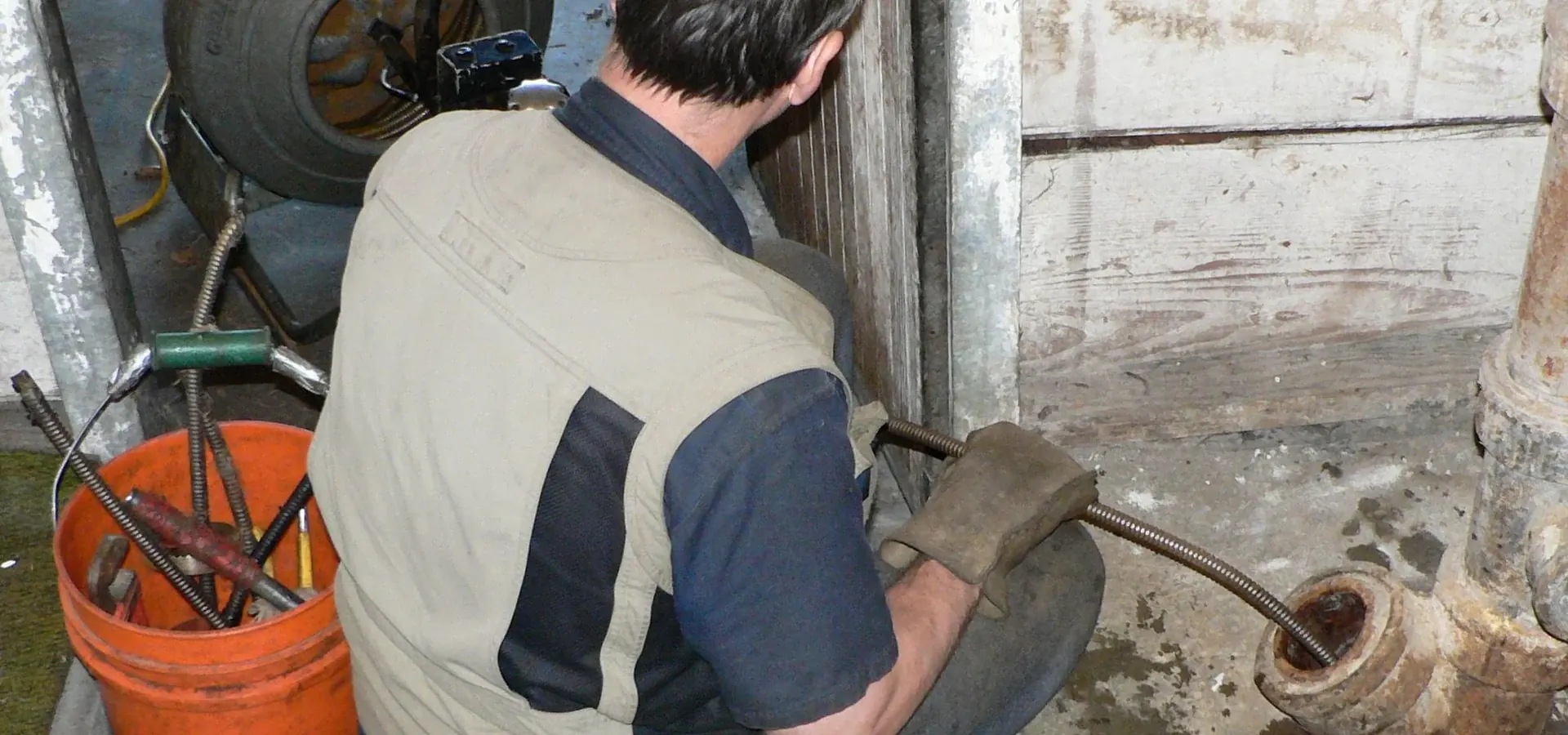
A drain snake, also called a cable or auger, is a coiled steel line on a motor drum. It spins into the pipe, hooks or breaks through the clog, and gets you flowing again. For a hair plug or a lump of paper in a 1.5-inch or 2-inch branch line, it is quick and does the job.
Snaking has a limit. The cable punches a hole through grease and scale, and the walls of the pipe stay coated, so the line can narrow again within weeks. When a drain keeps clogging, the plumber may recommend high-pressure water jetting, which scours the full pipe wall rather than just poking a channel through it.
Water not going down?
Call now and a licensed plumber will talk you through what to do until the drain is open.
Matching the tool to the clog
A rough guide to how a plumber reads the situation.
| What you see | Likely cause | Usual tool |
|---|---|---|
| One bathroom sink slow | Hair and soap in the trap | Hand removal, small cable |
| Kitchen sink backs up | Grease and food solids | Cable, then jetting if it returns |
| Tub and shower both slow | Hair mat in shared branch | Drum cable with retrieving head |
| Clog returns every few weeks | Scale or grease on pipe walls | Jetting after a camera look |
| All fixtures sluggish | Blockage on the main line | Larger machine, see main line service |
Kitchen sink clogs: grease, disposals and the dishwasher loop
Kitchen drains clog differently from bathroom drains. Hot cooking fat runs liquid down the pipe, cools in the first few feet, and builds a waxy lining that catches rice, coffee grounds and eggshell. Over a few months a 1.5-inch drain can shrink to the width of a pencil.
A double sink adds a wrinkle. If one basin drains and the other does not, the problem is usually the tailpiece or trap on the blocked side. If both are standing, the blockage is downstream at the wall, and a dishwasher that drains into the same line may start to leave dirty water in the bottom of the tub.
Run the disposal with cold water, and scrape plates into the trash instead of the drain. If a disposal hums but will not turn, that is a separate fault, covered on the garbage disposal repair page.
Shower and tub drains
Showers clog with a hair-and-soap felt that wraps around the crossbar or the stopper linkage. Pull the strainer and look first, since many slow showers need nothing more than a bent wire and ten minutes. If water backs up around your ankles and the strainer is clear, the clog sits below the trap and needs a cable.
A slow tub paired with a damp ceiling below is a different story. A leak in the drain line itself can mimic a clog, and water that seeps at the joint instead of running to the sewer often points to a failed gasket or cracked fitting. A plumber can test the line before opening any wall, and if a leak does turn up, leak detection pinpoints it without cutting more than necessary.
Older Covington homes and what they do to drains
Covington reached its population peak of 65,252 in 1930, and many of its homes date from that era or earlier. In houses built before about 1960, the main vertical drain stack is often cast iron, and its inside surface can grow rough scale over decades. That scale snags grease and paper, so a branch that clears easily in newer construction may clog more often here. Treat this as general guidance, not a statement about any single house.
The city also has 20,576 housing units, 12.0% of them vacant as of 2020. A fixture that sits unused for months dries out its trap seal, and sewer gas can drift into the room. If you manage or are watching over an empty property, pour a quart of water into every drain once a month, including the basement floor drain.
Covington has a combined sewer system that carries wastewater and storm water in the same pipe, according to Sanitation District No. 1 (SD1). If every drain in the house gurgles during a heavy storm and the water clears afterward, that is a sewer capacity issue and not a fixture clog. See sewer line cleaning for how that is separated from a house problem.
What a drain cleaning visit looks like
The order matters, because a good diagnosis saves you from clearing the wrong pipe.
- 1
Find the extent
The plumber runs water at nearby fixtures to see which ones share the blockage. That sets where to enter the line.
- 2
Open the line
Access comes through the fixture trap, a cleanout or a roof or wall vent if needed. The cable goes in until it meets resistance.
- 3
Clear and flush
The head cuts or hooks the clog, then the plumber runs water to confirm a full-bore flow and checks that nothing remains stuck at the joint.
- 4
Recommend only what the pipe needs
If the buildup is scale or roots, you hear it plainly, along with options such as a camera look or jetting.
When a clogged drain is an emergency
Most clogs are a nuisance. These are the ones that cannot wait.
Water rising toward the floor
A tub, toilet or floor drain that keeps filling is an emergency. Stop all water use in the house and call right away.
Sewage, not just gray water
Dark, foul water coming up from a basement floor drain carries bacteria. Stay out of it and keep the area clear of children and pets.
Water near electrical items
If the backup reaches outlets, a furnace or a water heater, do not walk through it. Shut off power at the panel only if the panel is dry and you can reach it safely.
Only working bathroom is down
A home with one toilet and no way to use it needs same-day service. Tell the dispatcher so it is scheduled accordingly.
What shapes the price of clearing a drain
A clear price before work starts means you hear the number first, and these are the reasons it moves.
Frequently asked questions
Yes. The 24/7 line is answered around the clock, including nights, weekends and holidays, and a licensed plumber can be sent when a drain is overflowing or no bathroom is usable. Tell the dispatcher what is backing up and where, and stop using water in the house while you wait.
It depends on how deep the clog is, how easy the line is to reach, what is blocking it and the time of day. You get a clear price before work starts, and the plumber explains what moved the number.
It is a poor first choice. Caustic cleaners can sit in a fully blocked pipe, damage older fittings and splash on whoever opens the trap next. A plug, a small hand auger and a trap cleaning are safer starting points.
A cable punches through the blockage but leaves grease or scale on the pipe wall. If it returns within weeks, ask about a camera inspection to look for roots, a sag or a rough cast iron section.
That depends on your lease and on what caused the clog. Landlords usually handle pipe defects, while a clog from items flushed or grease poured down the sink may fall to the tenant. Property managers can call the 24/7 line and tell us who to bill.
If several fixtures slow at once, or the lowest drain in the basement overflows when you run water upstairs, the main line is likely involved. That is the point to call for sewer line repair diagnosis rather than another round of plunging.