
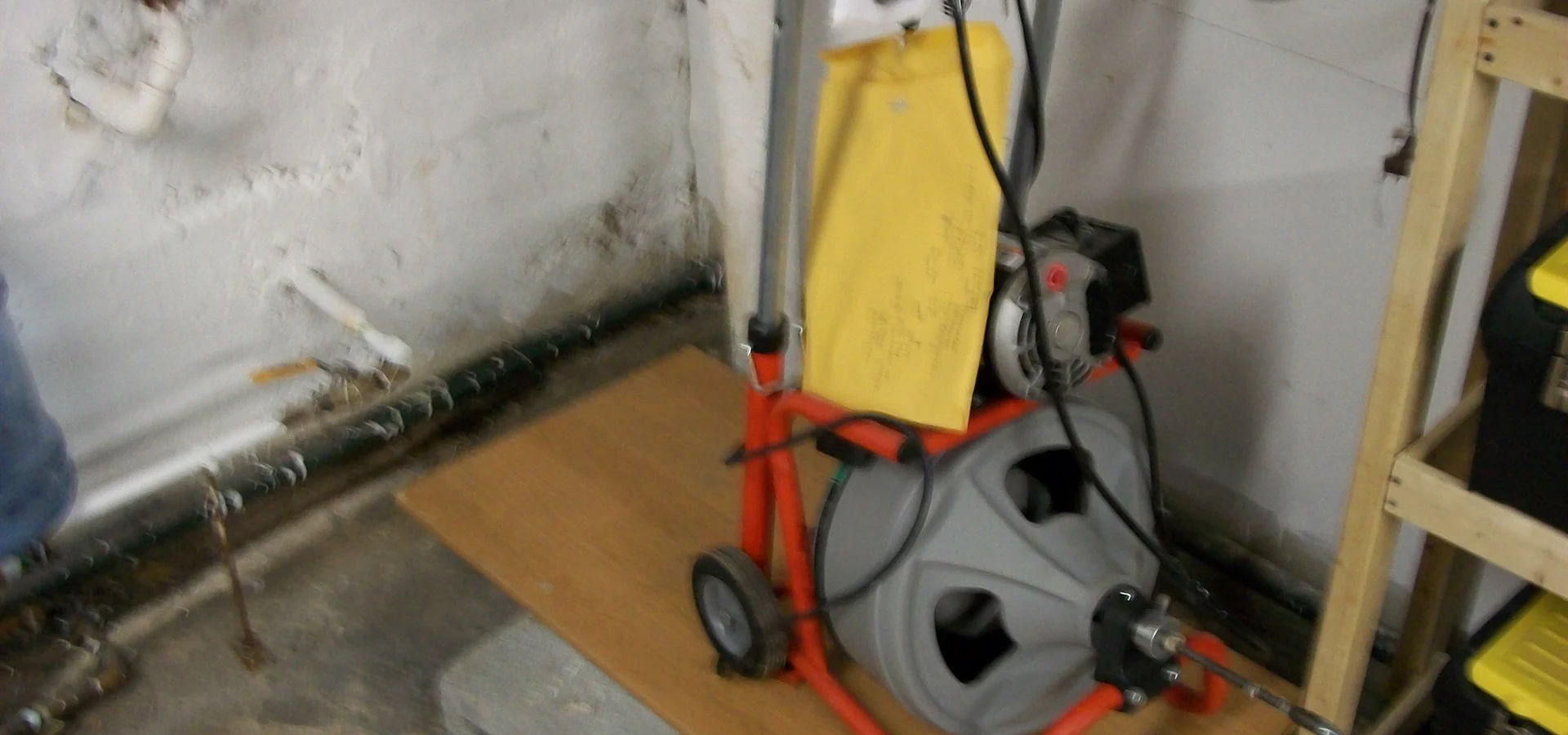
Sewer backup coming up the lowest drain
A blocked main sewer line sends wastewater to the lowest opening in the house, which is usually the basement floor drain, a laundry sink or a basement shower. Our 24/7 line is staffed for this call, and it is the situation where waiting until morning costs the most. While you wait for the plumber, stop every fixture in the house, keep people and pets away from the water, and stay clear of electrical equipment standing in it.
Sewer line cleaning in Covington, KY means running a machine through the 4-inch or larger pipe that leaves the house, cutting what is blocking it and flushing the line clear.
Main line or just one fixture?
Where the symptoms show up tells you which pipe is blocked.
| What is happening | Probably | Next step |
|---|---|---|
| One sink slow, rest fine | Fixture or branch clog | Cable that fixture, see drain cleaning |
| Toilet and tub both gurgle | Shared branch or stack | Cable the branch |
| Basement drain bubbles when upstairs water runs | Main sewer line | Clear the main from a cleanout |
| Every drain slow, sometimes only in rain | Main line or combined sewer | Camera the line, then decide |
| Toilet backs up with clear water in the tub | Main line | Stop water use, call immediately |
What blocks a main line
Tree roots
Roots find the moisture at a pipe joint, push in as fine threads and grow into a mat that catches paper. They are the most common reason a main line fails slowly, season after season.
Grease and wipes
Wipes labeled flushable do not break up. They snag on roots or a rough joint and build a dam.
Scale in old iron
Cast iron and some old clay pipes narrow with rust and mineral layers until little more than half the bore remains.
A crushed or collapsed section
A machine hits a hard stop and cannot pass. That points to repair, not cleaning.
Basement drain filling up?
Call now, and keep water off until the plumber has cleared the main line.
The cleanout is your friend
A cleanout is a capped pipe with a threaded plug that gives a plumber direct access to the main line. Look in the basement near where the main leaves the foundation, in a crawlspace or outside near the house wall. A line with an accessible cleanout can be machined in less time and without removing a toilet.
If you cannot find one, tell the dispatcher and describe where the main drain leaves the building. A house without a cleanout is a good candidate for installing one during the visit, since it makes every later cleaning simpler and cheaper.
Heavy rain, Covington's combined sewers and the private lateral
Sanitation District No. 1 (SD1) states that older areas like Covington and Newport have a combined sewer system, with wastewater and storm water in the same pipe, and that overflows can back up basements. If your drains only back up during a downpour and drain normally afterward, the cause may be the public system filling, not a blockage in your pipe. A plumber can check the main for roots and debris so you know which one you have.
Your side of the line is yours. SD1 says the property owner owns and maintains the lateral from the building plumbing to the connection with the district's sewer. Repeated blockages, backups, overflows or a sinkhole in the yard or street can mean a defect in that lateral, and a sewer camera inspection shows what is actually down there.
Ludlow sits on the Ohio River, and over 43% of the city went underwater in 1937. If you live near the river in Ludlow, mention that when a line backs up, since low lots drain with less fall toward the street.
Storm drain and yard drain cleaning
Roof leaders, area drains and driveway grates feed a separate path from your toilets, and they clog with leaves, silt and grit. When a window well or an exterior stair drain fills in a storm, it is usually one of these. A machine or a jet clears the sludge, and the plumber can tell you where the pipe discharges.
Whether a storm line ties to a public system or stays on your lot changes who is responsible. Describe where the water pools when you call, and ask the plumber to confirm the connection before work starts.
How the line gets cleaned
A typical main line visit follows this order.
- 1
Find the entry
The plumber locates the cleanout, or pulls a toilet when none exists, and confirms the line is the main before putting equipment in.
- 2
Cut through
A larger machine with a cutting head chews through roots and soft blockages, usually 50 to 100 feet of cable.
- 3
Scour if needed
Heavy grease or scale may call for hydro jetting to wash the walls rather than just open a channel.
- 4
Check the result
Flow is tested by running water, and a camera pass is recommended when roots or a break are suspected.
Why quotes for a main line vary
A clear price before work starts. These are the pieces that shape it.
Frequently asked questions
Yes. The 24/7 line is answered overnight and on weekends, and a licensed plumber can be sent when sewage is coming up. Stop using water, keep away from the backup and give the dispatcher your address.
Run water upstairs and watch the basement floor drain. If it bubbles, rises or smells, the main line is likely involved. One slow sink with everything else fine points to a branch or fixture drain cleaning job.
The price depends on access, length, what is in the pipe, pipe condition and time of day. You get a clear price before work starts.
Not usually. Roots regrow where the joint stays open. Cleaning buys months or years, and a camera shows whether a joint or section needs repair to end the cycle.
Stop water use, call the landlord or property manager, and photograph the damage. A manager can also call our line directly and we will bill the owner.
Possibly not. SD1 notes that combined sewers can overflow and cause backed-up basements in older parts of Covington. A plumber can clear and camera your lateral to rule out roots, then you can talk to SD1 on 859-578-7450.