
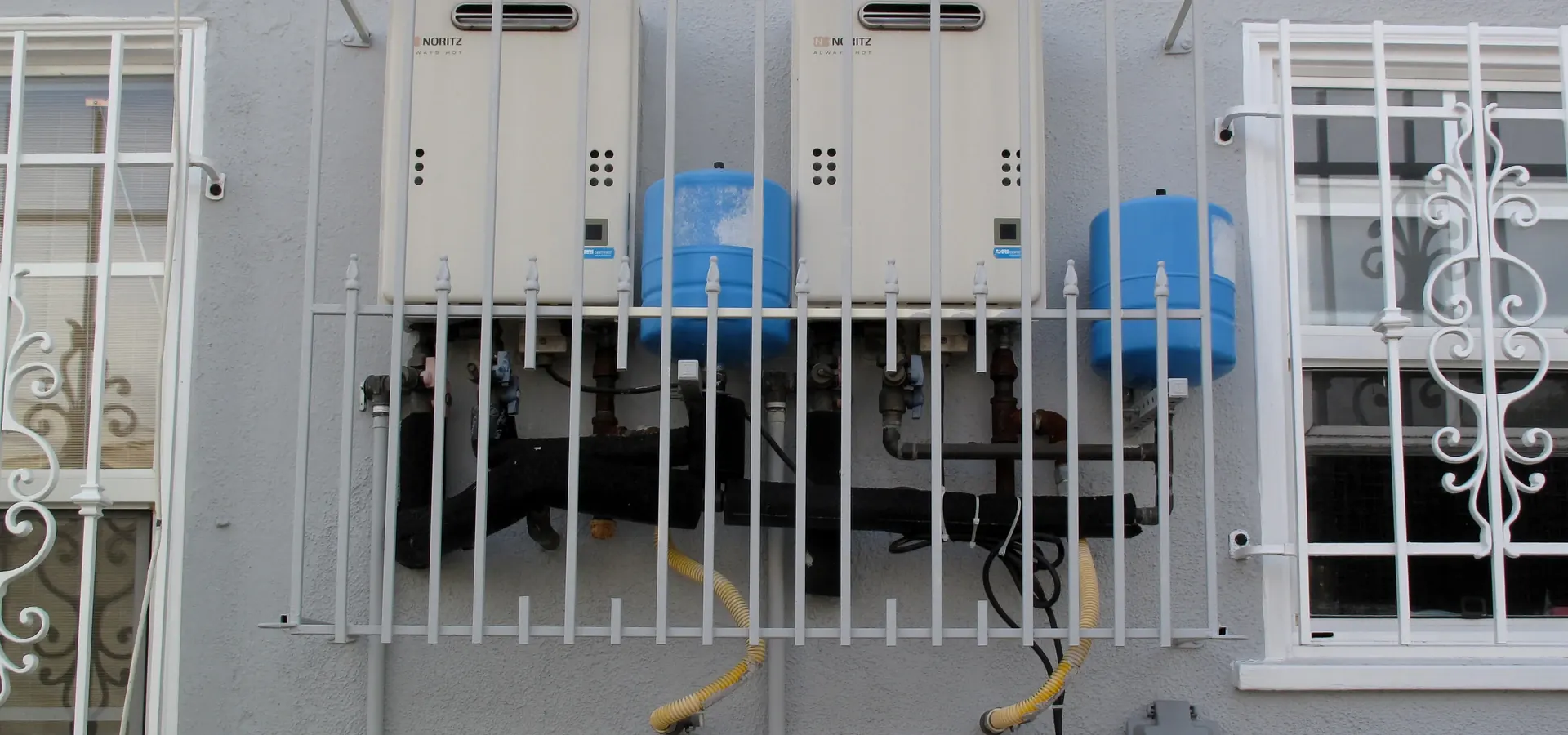
How a tankless water heater works and when it makes sense
A tankless water heater, also called an on-demand heater, has no storage tank. When you open a hot tap, flow sensors start the burner or elements, and water passes through a heat exchanger and leaves hot in a few seconds. The DOE puts tankless life at about 20 years, compared with 10 to 15 for a storage tank.
In Covington, KY, the pitch is simple: no 40-gallon reserve to run out of, less floor space, and no tank to burst at midnight. The trade-off is that the unit must deliver a lot of heat at once, so gas line size, venting and electrical capacity decide whether a house suits one.
Cold shower halfway through? Your tank may be too small
If your family empties a 40-gallon tank before the last shower, or the recovery wait is longer than patience allows, the fix is often a different kind of heater and not a bigger tank. Tankless units heat as long as water is flowing, which ends the run-out problem. That is why the next sections look at flow rate, fuel type, venting and care.
Flushing and descaling a tankless heater
Mineral scale is the leading cause of tankless problems. It coats the heat exchanger, narrows the passages, and forces the unit to work harder, which leads to error codes, uneven temperature, noise and early failure. Flushing circulates a mild acid, commonly white vinegar, through the exchanger to dissolve it.
A flush needs isolation valves, which let a plumber close off the house supply and connect a small pump and hose to the service ports. Without them, the job requires adding the valves first. The unit runs the cleaning solution through for around 45 minutes to an hour, then is rinsed with clean water, and the inlet screen is cleaned.
How often to flush depends on your water. We do not quote a hardness number for Northern Kentucky Water District supply. Instead, test your tap with an inexpensive kit and ask NKWD for its annual water quality report. Then follow the maker's guidance, since some manufacturers call for yearly service and others a longer interval.
Tankless unit acting up?
Call and tell us the error code or symptom. We will tell you what to check and whether a visit makes sense.
Gas versus electric tankless
Fuel type shapes installation work more than brand does.
| Factor | Gas tankless | Electric tankless |
|---|---|---|
| Output at once | High, suits larger homes | Lower, limited by circuit capacity |
| Typical upgrades | Larger gas line, new vent | Heavy circuit, extra breakers |
| Venting | Required, sealed or power vent | None |
| Space | Needs wall clearance and vent path | Small, flexible placement |
| Good fit | Replacing a gas tank in a larger household | Small homes, apartments, point-of-use |
Why a tankless unit leaks or throws an error
The cause is usually mechanical or scale-related, and the display code tells us where to look.
Scale on the heat exchanger
Reduced flow and overheating trigger codes and can crack the exchanger over time, which then leaks.
Loose or worn connections
Union fittings, flex connectors and isolation valves can seep and leave puddles on the floor beneath the unit.
Condensate drain problems
Condensing gas models make acidic condensate that must drain freely. A blocked line backs up and drips from the cabinet.
Vent faults
Blocked, disconnected or sagging vent pipe causes ignition errors and shutdowns, and exhaust leaks are a safety problem.
Freeze damage
A unit on an exterior wall or in an unheated garage can crack in a cold snap if power or protection is lost.
Venting basics for gas tankless units
Gas tankless units move a lot of hot exhaust through small-diameter pipe, so vent material, length and slope matter. Condensing models run cooler and can use plastic pipe, while non-condensing models need metal vent rated for the temperature. Many run direct vent, pulling air in from outside.
If you are swapping a gas tank, the existing chimney or flue rarely suits the new unit as it is. Expect a new sidewall or roof vent run, and know that a gas leak or exhaust smell is a reason to leave the building and call your gas utility or 911, not a plumber.
What a tankless install or conversion involves
A conversion from tank to tankless is bigger than a like-for-like swap.
- 1
Load check
We add up the fixtures you run at once and compare that flow and temperature rise to what the unit can deliver.
- 2
Fuel and vent plan
Gas line size, regulator and vent route are checked, or the electrical panel and wire run for an electric unit.
- 3
Mount and connect
The unit goes on the wall with isolation valves on both water lines and a relief or condensate drain path.
- 4
Test and teach
We check temperature at the farthest tap, review error codes, and show you the flush ports.
What changes the price of tankless work
Installs, flushes and repairs each have different drivers.
Tankless and Covington's water
Northern Kentucky Water District serves 99 percent of Kenton County households. Its Taylor Mill plant draws from the Licking River, and the Fort Thomas and Memorial Parkway plants draw from the Ohio River. Where your home sits in that system can shape what your heater sees, so use a tap test and the annual NKWD water quality report to decide your flush schedule.
Covington has 20,576 housing units, and many in older districts have gas service sized for old tank heaters. A tankless upgrade may need more gas capacity than the house provides. Homeowners in Ludlow and other nearby towns can call the same line for assessment.
Next steps: replacing, installing or repairing
If a failed tank is pushing you toward the switch, water heater replacement covers urgent swaps. For a planned job, water heater installation explains permits and location. For a tankless leak that is soaking the floor, leak detection helps trace it. Permit rules vary, so ask the Kentucky Division of Plumbing or the local plumbing inspector if the unit is moving.
Frequently asked questions
It depends on your water and the maker's instructions. Test your tap, ask NKWD for its annual water quality report, and check the manual. Many owners flush once a year.
Common causes are scale on the heat exchanger, a clogged inlet screen, too many fixtures running at once, or a gas supply or vent fault. A flush and a flow check usually sorts it out.
It can be if you value continuous hot water, space and a roughly 20-year life per the DOE. The extra gas line, vent and electrical work can offset savings, so we cost that before you decide.
Installation depends on fuel type, venting, gas or electric capacity and access. Flushing depends on whether isolation valves exist and how much scale there is. You get a clear price before work starts.
Some owners do, if isolation valves and service ports are in place. Without them it is easy to leak or damage the unit, so many choose a plumber.
The owner or manager normally arranges flushing and repairs unless the lease says otherwise. A manager can call us to schedule service, approve the price and set tenant access.
Common sources are loose fittings, a blocked condensate drain, a cracked heat exchanger from scale or freezing, and valve seepage. Turn off the water to the unit and call for a diagnosis.