
What a scope price really covers
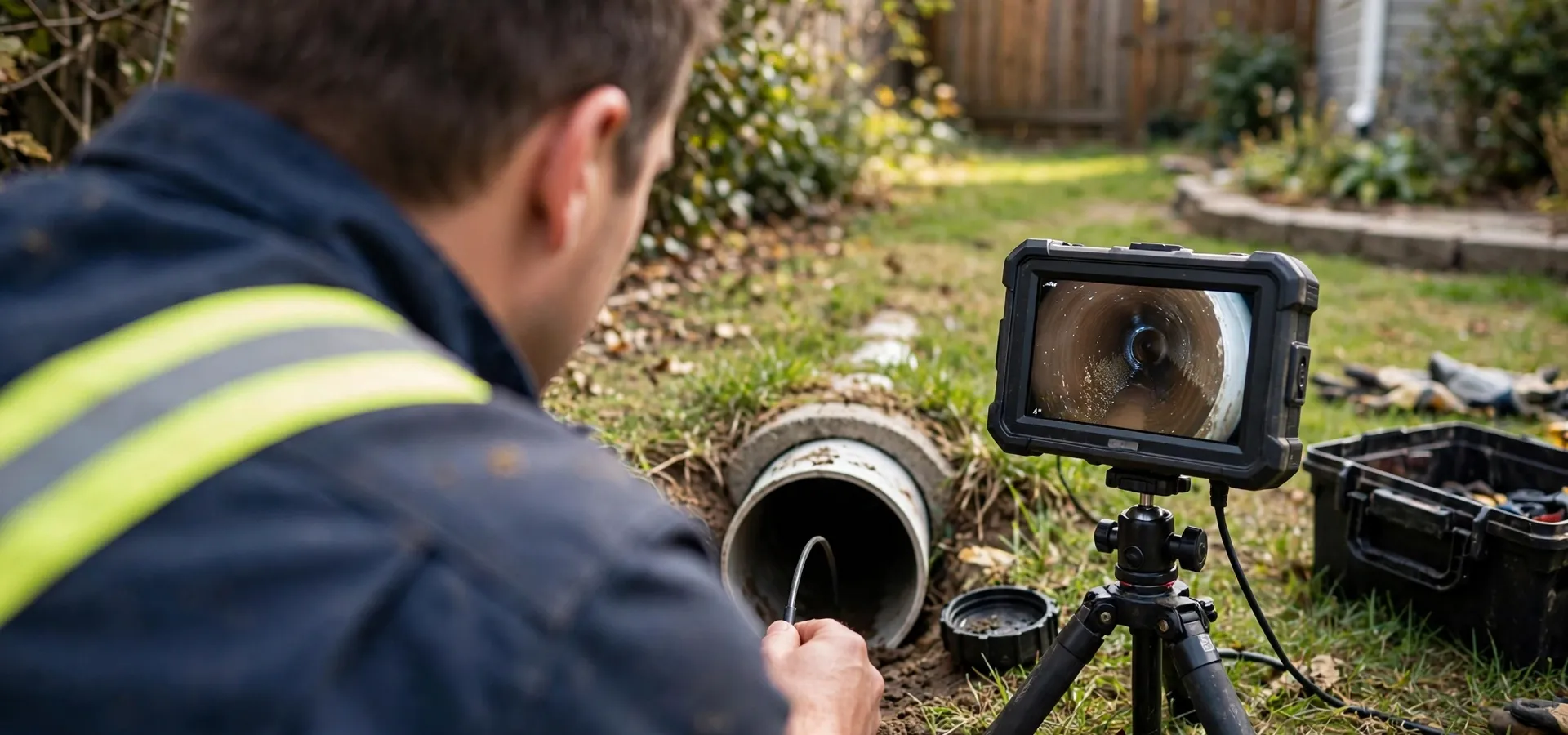
A sewer scope inspection feeds a waterproof camera on a flexible cable into the line between your house and the sewer connection. The price covers the labor to get the camera in and out, the time to watch and record the pipe, and a written or video report of what was seen. It does not cover cleaning, repairs, or digging.
We do not quote numbers in a blog post, because the same house can get very different prices depending on the access and the pipe. What you can do is learn what moves the number and ask the right questions before you book.
The things that move the bill
Compare these across quotes, not just the bottom line.
Reading an itemized quote
Ask for the quote in writing, with these lines separated.
| Line item | What it should say | Red flag |
|---|---|---|
| Camera inspection | Length covered, cleanout used | No mention of access point |
| Pre-cleaning | Yes or no, and the method | Cleaning bundled with no explanation |
| Locating | Marked depth and surface paint | Missing when you plan to dig |
| Recording | Video and written notes delivered | Verbal findings only |
| Return visit | Whether a re-scan is included | Extra charge not mentioned |
What the camera can and cannot tell you
A scope shows cracks, offset joints, root intrusion, sagging sections called bellies, and corroded pipe walls. It cannot predict the next collapse or tell you the soil conditions around a pipe. A clean video is a snapshot of the day it was shot.
Water in the line can hide a dip, and a very dirty line can block the lens. Ask the plumber to note any section they could not see, so you are not guessing about a gap in the footage.
How the inspection goes
Knowing the order helps you spot a rushed job.
- 1
Find the entry point
The plumber locates a cleanout, usually a capped pipe in the basement, crawlspace, or yard. If none exists, a toilet pull or roof vent entry is an option.
- 2
Feed the camera
The camera head goes in on a push cable with a counter showing distance. The crew watches live and marks defects.
- 3
Mark and measure
A transmitter on the camera head lets the locator find its position above ground. That gives you the depth and the path of the pipe.
- 4
Review and report
You get the recording and a summary. A short debrief explains what is routine wear and what needs action.
When a scope earns its price
Not every house needs one. These situations usually do.
Buying an older home
The sewer line is out of sight and expensive to fix. A scope before closing gives you facts for the negotiation.
Repeated backups
Two or more backups in a year point to something other than bad luck. The camera shows the cause.
Slow drains everywhere
If every fixture is sluggish, the problem is likely the main line, not individual traps.
Mature trees near the line
Roots seek the moisture in a joint. A scope can spot early intrusion before a blockage.
Before a big renovation
A new bath or kitchen adds load to an old drain. Know the pipe's condition first.
Mistakes that waste the money
Choosing the lowest quote without asking about recording is the first. A verbal summary is not evidence, and a buyer's agent cannot argue with a note on a napkin. Insist on the video.
Scoping before cleaning a badly blocked line is the second. The camera cannot see past grease and debris, so you pay twice, once for a useless scan and once for the real one. Ask if cleaning is needed first.
Ignoring a dip or offset because the pipe still drains is the third. A belly that holds water causes slow, repeated clogs, and it shows up on camera. A finding like that belongs in the repair discussion, not the shrug pile.
After the video: next steps
Most scopes end with one of three results: nothing alarming, a line that needs cleaning, or a defect that needs repair. A clean result is still useful as a baseline for later. If roots or grease are the cause, main line cleaning usually comes next.
If the camera finds a crack, collapse, or major offset, the conversation moves to spot repair, lining, or replacement. Ask for each option in writing, and ask which one the recording supports.
Covington, KY: what to know before you start
Sanitation District No. 1 (SD1) says the property owner owns and maintains the private lateral, the pipe from the building plumbing to the connection with SD1's sewer. That means a defect you find on camera between your house and the connection is your responsibility, not the district's. Ask the plumber to note where the footage shows the connection point so you can tell which section is yours.
SD1 has had a program for defective laterals under public roadways, linked to pavement failure, building backup, or sewer overflow. Current availability must be confirmed, so call SD1 at 859-578-7450 before you plan a repair. Covington and Newport have a combined sewer system, so overflows can back up basements. Signs of a defect include blockages, backups, overflow, and sinkholes, and a sinkhole near the street is worth reporting to SD1.
Source type: [SD1] Sanitation District No. 1 lateral ownership and combined sewer notes, [CITY] 2015 notice on the defective lateral program
Frequently asked questions
It can, since inspections for a sale often include a full recording and a written note. Ask whether the report is something you can hand to your agent or lender. A licensed plumber will give a clear price before work starts.
That is negotiated in the sale. Many buyers order and pay for it as part of due diligence. Your agent can help ask for a repair credit if the video finds a defect.
Often, yes. Cleaning is separate work, and your quote should list it. Ask the plumber at the start whether they expect to clean before the scan.
Rental cameras exist, but reading the footage takes experience. A bad read can miss a belly or mistake a joint for a crack. A written report from a licensed plumber is easier to use in a negotiation.
There is no set interval. Scope when you buy, after a backup, or when you notice slow drains in every fixture. A line with a known problem may justify an occasional re-check.
Yes. Our 24/7 line is open when waste is coming up in a tub or floor drain. A scope is a planned job, so same-day appointments are available when the schedule allows.
The owner maintains the private lateral up to the connection with SD1's sewer. SD1 has had a program for defective laterals under public roads, so confirm current availability by calling SD1 at 859-578-7450. The same ownership rules apply across Kenton County sewer service, and our pages for Ludlow and Fort Mitchell cover those towns.