
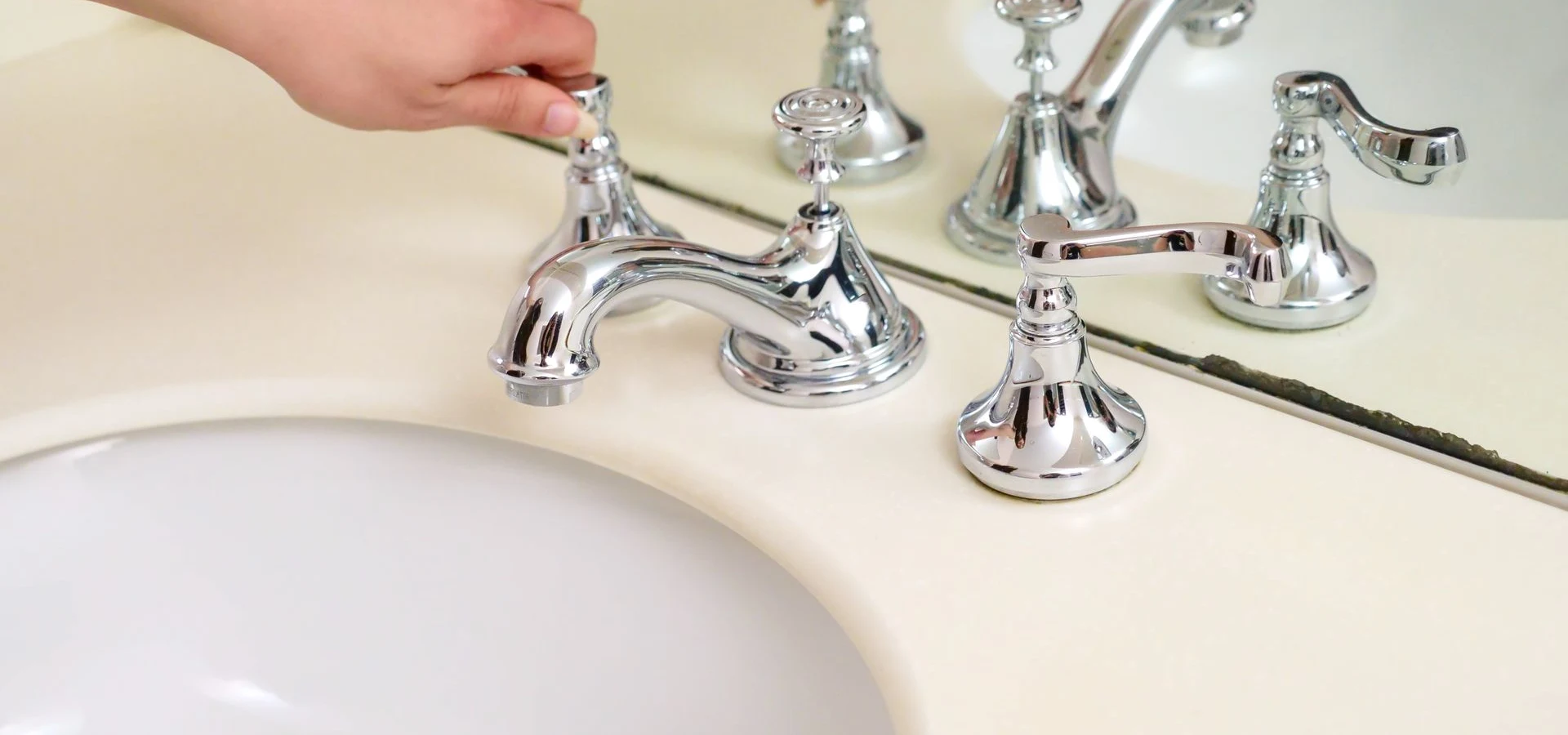
A faucet that will not shut off right now
If water will not stop at a faucet, or a supply line is spraying under the sink, call our 24/7 emergency line at any hour. Turn the oval handle on the supply stop under the fixture clockwise. If that handle is stuck or leaks, shut the main water valve instead and open a lower faucet to drain the line.
Plumbers find the cause by working from the outside in: handle, spout, cartridge or stem, then the supply stops and lines. Most faucet failures are small parts wearing out, not whole fixtures. The skill is knowing which small part it is before anything is taken apart.
Faucet types and what usually wears out
The repair depends on how the faucet controls water inside.
| Faucet style | Part that fails | Typical symptom |
|---|---|---|
| Compression (two handles) | Rubber washer and seat | Drip from spout, handle needs hard turning |
| Cartridge | Cartridge or O-rings | Leaks at the handle, stiff or loose movement |
| Ball (single lever) | Springs and seals | Drip at spout, water around the base |
| Ceramic disc | Disc seals | Slow drip, handle loses its stop |
| Tub and shower valve | Cartridge or stem | Water will not go hot or cold, drip from showerhead |
What one drip costs you
The EPA says a faucet dripping once per second wastes more than 3,000 gallons a year. That is treated water you pay for and never use. A drip also stains porcelain and marks a part that is wearing out and will get worse.
A drip that stops when you turn the handle harder usually means a worn washer or seat. A drip that starts at the base of the spout points to O-rings in the body. Repair is almost always cheaper than waiting.
Spray or a steady stream under the sink?
Call the 24/7 line while you close the valve. A licensed plumber can walk you through it.
Signs the faucet needs more than a tighten
Tightening a nut fixes a few of these. Most need a part.
Handle leaks when you run water
Worn cartridge or O-rings. The faucet works but weeps around the base.
Hot and cold mix wrong
A worn cartridge lets the hot and cold lines blend, so the temperature wanders.
Weak flow from one faucet only
Mineral buildup in the aerator or a partly closed supply stop. The other fixtures tell you it is local.
Handle spins without control
A stripped handle screw or broken stem, which can leave the water running.
Pooling in the cabinet
A leaking supply line, a corroded stop valve or a tired drain connection.
Broken or stuck supply valves
The small stop valve under a sink is the part you rely on in an emergency, and it is the part most likely to be stuck. Many older valves have not been turned in years. When one finally gets moved, the stem packing can leak or the valve can seize half open.
A plumber replaces a bad stop with a new quarter-turn valve, which gives you a dependable shutoff before the next failure. If the stop is soldered into old copper or threaded onto galvanized pipe, the repair takes longer than a simple swap. For house-wide corroded pipe, ask about repiping an older house.
Shower and tub valve problems
Behind the wall, shower and tub valves use a cartridge or stem that wears just like a sink faucet. Signs are a drip from the tub spout after you shut off, a shower that turns scalding when another fixture runs, or a handle that no longer stops the water. Some valves can be repaired from the front, but others need an access hole in the wall, so the price is clear before work starts.
Old buildings, original fixtures
Mainstrasse Village is a 91-acre National Register district with Federal, Victorian, Italianate and Queen Anne buildings, and Covington's population peaked at 65,252 in 1930. Homes of that age often still carry original or early replacement supply stops and fixtures. Expect corroded stop valves and old shutoffs that were never replaced, which is why a plumber may suggest swapping the stops while the faucet is out.
If a faucet repair turns into relocating a sink or moving a supply line, the Kentucky Department of Housing, Buildings and Construction says moving fixtures needs a plumbing permit. Permit rules vary, so ask the Kentucky Division of Plumbing or the local plumbing inspector.
What drives the cost of a faucet repair
Here is what moves the bill up or down.
Frequently asked questions
Yes. The 24/7 emergency line takes calls overnight and on weekends, and same-day appointments are offered when available. Close the stop valve under the fixture before you call if you can.
It depends on the faucet style, whether parts are available, and how hard the valve is to reach. You get a clear price before work starts, and the plumber explains repair versus replacement.
Often yes. A new cartridge or washer fixes most drips. If the finish is worn or parts are discontinued, a new faucet from our installation service may be the better buy.
The seat inside the faucet body is probably pitted, which cuts the new washer. A plumber can resurface the seat or replace the faucet.
Shut off the water to the room or house, then call. A worn cartridge or stem is the usual cause. The repair may mean opening the wall.
That depends on your lease, so tell your landlord or property manager first. Managers can call our line to book a repair and a clear price.
Not usually. A slow sink drain is a clog, which a drain cleaning visit solves. For Ludlow homes, the Ludlow service page has details.