
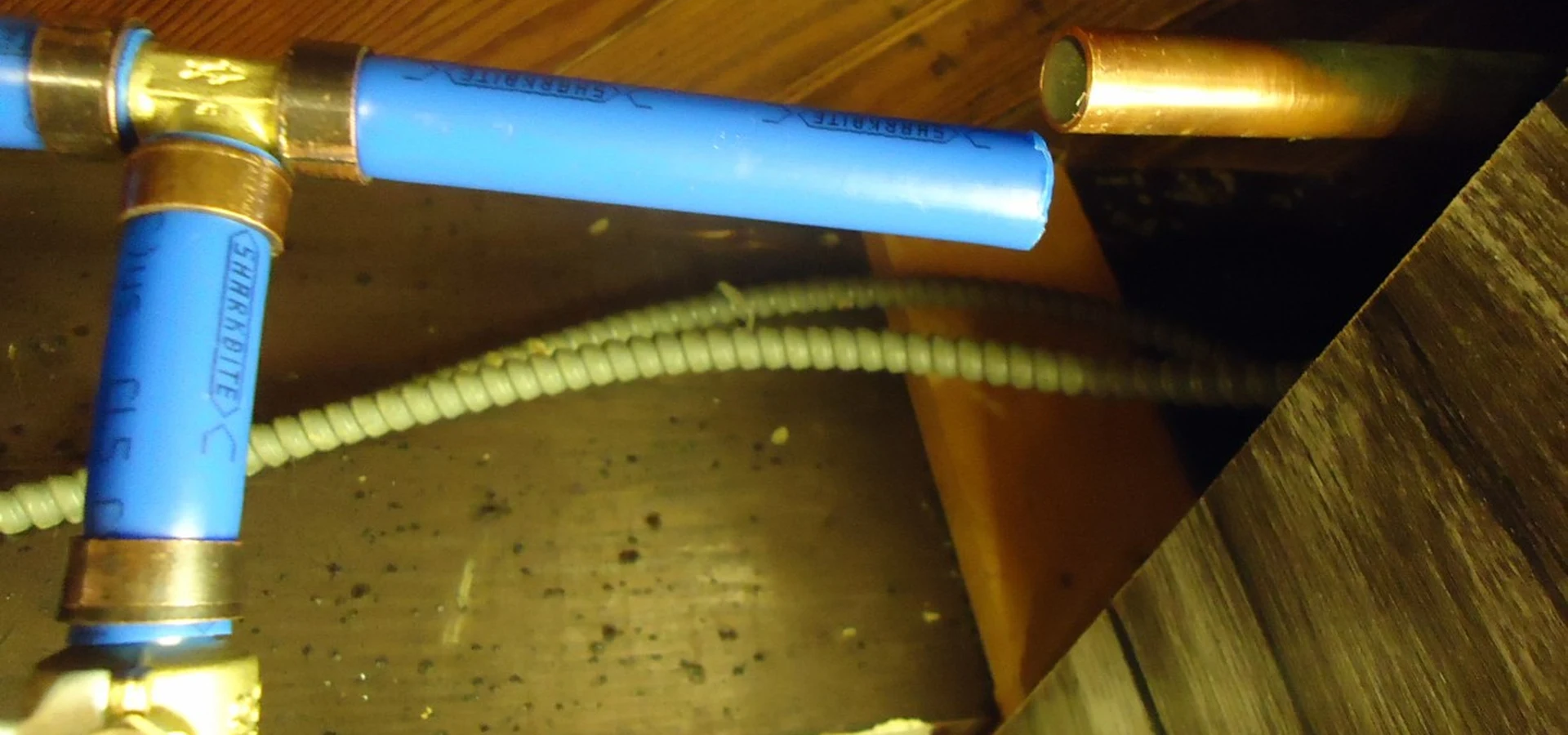
What repiping actually replaces
Repiping replaces the water supply lines inside a house, the pipes that bring pressure to sinks, tubs, toilets and appliances. Drain pipes are a separate system. In an older Covington, KY home, the supply pipes may be galvanized steel, early copper or a plastic that was later found to fail.
A repipe is planned work. You decide when the water goes off, which walls get opened and what the new pipe will be. The alternative is waiting for the pipe to decide for you.
Rusty water or weak pressure in the shower?
Brown or orange water, a shower that dribbles while the sink runs fine, or the third pinhole leak this year all point to pipe that is failing from the inside. The technical name for fixing it is repiping, and it starts with finding out whether the problem is one stretch or the whole house.
Pipe materials and what to expect
The material tells you how the pipe fails.
| Material | How it fails | Usual advice |
|---|---|---|
| Galvanized steel | Rusts inside, narrows over time, flakes brown water | Replace when pressure drops or leaks start |
| Polybutylene (gray plastic, late 1970s to mid 1990s) | Brittle fittings split without warning | Replace, even if it looks fine |
| Old copper | Pinholes, green crust at joints | Repair isolated spots, repipe if it repeats |
| CPVC | Becomes brittle near heat and with age | Inspect, replace failing runs |
| PEX | Rare problems from sunlight or bad fittings | A common replacement choice |
Thinking about replacing your pipes?
Call the 24/7 line to describe what you see and book a planned visit.
Signs the pipes are done
One sign is a repair. Several is a repipe conversation.
Brown or orange water
Rust flaking inside galvanized pipe, especially after the water has sat overnight.
Pressure drops everywhere
Pipe walls build up scale until a half-inch line carries a fraction of its original flow.
Pinhole leaks
Tiny sprays in copper or a damp spot on drywall that keeps coming back in new places.
Green crust at joints
Copper corroding at fittings. A single patch is fine. A pattern is not.
Stains on ceilings
A wet ring below a bathroom or hallway can mean a leaking supply line above. A leak detection visit finds the exact spot.
Whole house or just the bad section?
Partial repiping makes sense when the damage is limited, such as one bathroom branch or the stretch of pipe between the meter and the water heater. A short run is cheaper and less disruptive. If the pipe is the same age and material throughout, though, the next failure is usually only a matter of time.
Whole-house repiping replaces everything from the main to each fixture in one project. It costs more at once but ends the repair cycle. Failing service pipe from the meter into the house is a separate job, covered on the water line repair page.
Copper or PEX
Copper lasts for decades, resists heat and is familiar to every plumber. It costs more in material and takes more labor. PEX is flexible plastic tubing that threads through walls with fewer fittings, tolerates freezing better than rigid pipe and often means smaller holes in the drywall.
Neither is perfect. Copper can pit in some water, and PEX has to be protected from sunlight and sharp edges. A plumber who looks at your walls, basement and crawl access can say which works better in your house.
How a repipe is planned and done
A typical order of work.
- 1
Inspect and map
The plumber traces every supply line, checks pressure and decides where the new pipe can run.
- 2
Price and permit
You get a clear price before work starts. Permit rules vary, so ask the Kentucky Division of Plumbing or the local plumbing inspector.
- 3
Replace in stages
Walls and ceilings are opened where needed, and new pipe is pressure-tested before anything is covered.
- 4
Close up and flush
Water is restored, lines are flushed, fixtures are reconnected and the work is inspected where required.
Older Covington housing and what is behind the walls
Covington's population peaked at 65,252 in 1930, and Mainstrasse Village alone is a 91-acre historic district of Federal, Victorian and Italianate buildings. Houses from that era were piped in galvanized steel or early copper, so any that have not been repiped may be due. A home in a historic district may also need extra care opening plaster walls.
The Kentucky Department of Housing, Buildings and Construction says new installations and moving fixtures need a plumbing permit, and work inside walls must be inspected before it is covered. Permit rules vary, so ask the Division of Plumbing or the local plumbing inspector early in the plan. Related planned work is on our plumbing installation page.
What shapes the price of a repipe
Every house prices differently for these reasons.
Frequently asked questions
Look for brown water, falling pressure, repeated pinhole leaks or gray polybutylene pipe. One leak can be repaired, but several signs together usually mean planning a repipe.
It points that way, especially in a house with original galvanized steel. A plumber checks whether the problem is the whole system or one stretch, and a leak detection check can rule out a hidden leak.
It depends on house size, pipe material, wall access, permits and whether it is a whole-house or partial job. You get a clear price before work starts.
Expect the water to be off for part of at least one working day on most whole-house jobs. The plumber can usually restore a fixture or two overnight.
New installations and moving fixtures usually do, and concealed work must be inspected before it is covered. Permit rules vary, so ask the Kentucky Division of Plumbing or the local plumbing inspector.
Yes, when the damage is local. A plumber can cut out the bad section and sweat in new pipe. If pinholes keep appearing, the whole run may be thinning.
Same-day appointments are offered when available, and planned work can be scheduled with property managers. Call to talk through access and timing for the building.
Yes. Our Taylor Mill page covers that area, and homes there built later may have newer pipe that needs inspection first.