
The short answer: a vinegar flush, if the manual allows it
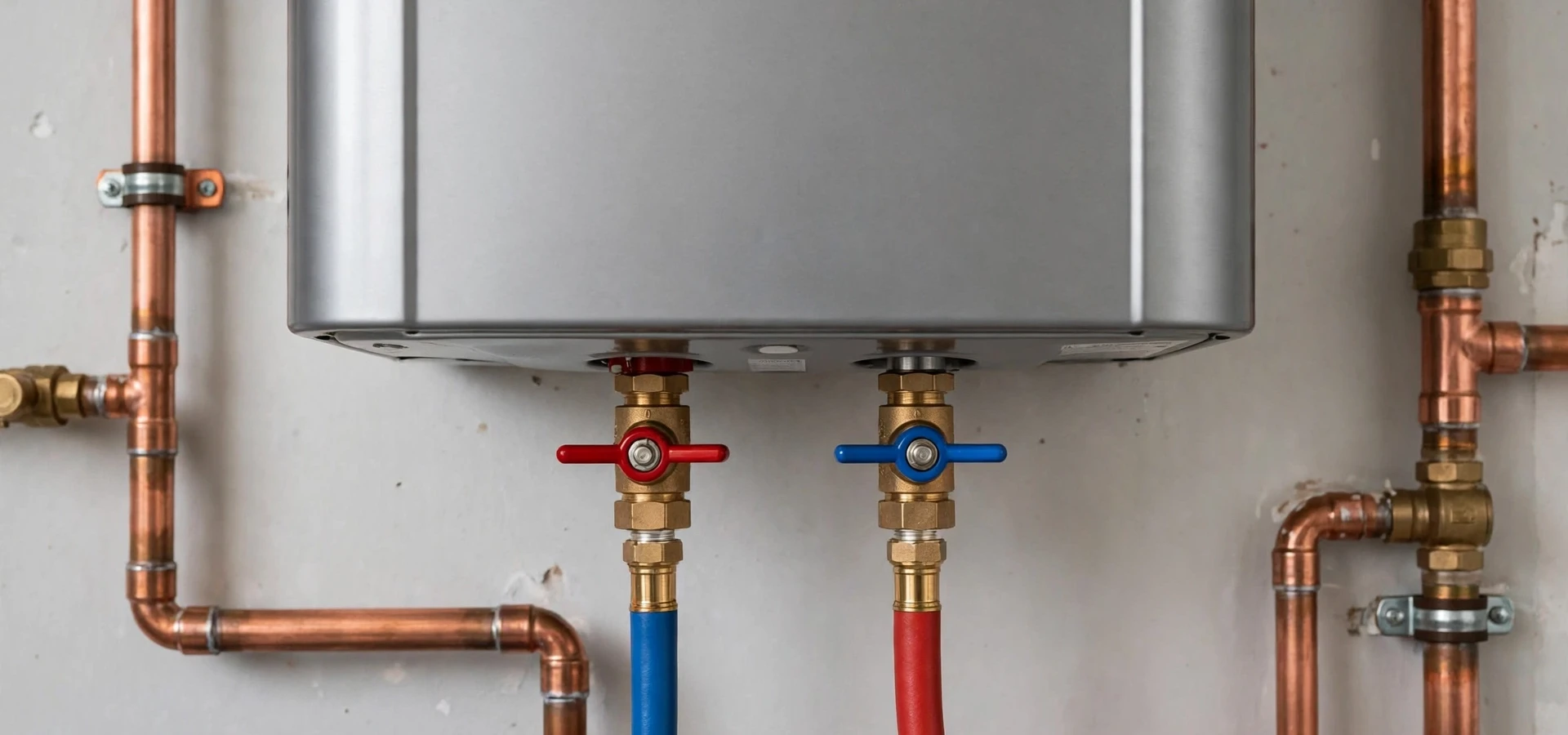
To clean a tankless water heater with vinegar, you shut off power and gas, close the water valves, hook a small pump and two hoses to the service ports, and circulate white vinegar through the heat exchanger for about 45 to 60 minutes. Then you rinse with clean water until the smell is gone. Most units made for this have two isolation valves with flush ports built in.
Check your owner manual first. A few makers specify their own descaling solution or a different time, and some forbid vinegar on certain seals. If the manual is gone, the model number on the unit's data plate will find it online in a minute.
Signs the heat exchanger is scaling up
Scale builds when heated water drops dissolved minerals onto the inside of the heat exchanger. The coating acts like insulation, so the burner or element works harder for less heat. Over months the unit may take longer to warm up, swing between hot and lukewarm, or shut down with an error code.
You may also hear popping or rumbling as water boils in tiny pockets under the scale. Low flow at the taps, even when the cold side runs fine, is another clue. If you see none of these, you can skip the flush and just check the inlet screen.
What to gather before you start
Having everything on the floor beside the unit keeps the job short and dry.
- A small submersible pump rated for hot liquid and two washing-machine style hoses with the right fittings.
- About 3 gallons of plain white vinegar (5 percent acidity), plus a 5-gallon bucket.
- A towel, a flashlight, and a second bucket for the drain water.
- Your owner manual, open to the maintenance page.
- Safety glasses and gloves, because vinegar stings eyes and small cuts.
- A garden hose or clean-water source for the final rinse.
The flush, one stage at a time
Work in this order. Skipping the shutoff stage is the one mistake that can hurt you.
- 1
Kill power and gas
Unplug an electric unit or switch off its breaker. On a gas unit, close the gas valve and unplug the power cord. Let the unit cool so the first drain water is not scalding.
- 2
Isolate the unit
Close the hot and cold isolation valves, then open the pressure relief ports on both to release pressure. Place the bucket under the ports, since a little water always escapes.
- 3
Circulate the vinegar
Attach one hose from the pump to the cold-side port and the other from the hot-side port back into the bucket of vinegar. Open the ports and run the pump for 45 to 60 minutes. Use the longer time if the vinegar comes back cloudy.
- 4
Rinse and restart
Drain the vinegar, remove the hoses, and close the ports. Open the cold valve and run water through the unit for 5 minutes. Clean the inlet screen, restore gas and power, and open a hot tap to purge air.
One number worth knowing
The US Department of Energy puts a tankless water heater's life at about 20 years, versus 10 to 15 for a storage tank. Regular flushing is a large part of reaching that number. A unit that never gets descaled can fail years early.
Do it yourself or call a plumber?
Match what you see to the right next move.
| What you notice | Likely cause | Your move |
|---|---|---|
| Slow warm-up, weaker heat | Scale on the heat exchanger | Vinegar flush if the manual allows |
| Low flow on hot only | Clogged inlet screen or scale | Clean the screen first, then flush |
| Error code returns after flushing | Sensor, fan, or igniter fault | Call a plumber for the repair |
| Water around the unit | Leaking fitting or cracked exchanger | Shut off water, then call |
| No isolation valves installed | Unit was set up without service ports | Have valves added before flushing |
| Smell of gas near the unit | Gas leak | Leave the building, call your gas utility or 911 |
Mistakes that cost people a heat exchanger
Most damage comes from rushing or improvising.
Using bleach or a harsh cleaner
Never mix vinegar with bleach, since the fumes are dangerous. Stick to plain white vinegar unless the maker names another product.
Forgetting to rinse
Leftover vinegar can leave a sour taste and pit some seals. Flush with clean water until the smell is gone.
Running the pump dry
A pump with no liquid overheats in minutes. Keep both hose ends under the vinegar surface.
Reopening the gas first
Restore water and fill the unit before gas and power. Firing an empty heat exchanger can crack it.
Chasing every error code
A flush clears scale, not a failed fan or sensor. If the code returns, stop and have it diagnosed.
How often to flush, and what shortens the gap
Many manufacturers suggest a flush about once a year. The right interval depends on how mineral-heavy your water is, and no verified hardness number exists for this site, so please do not trust a guess. Test your tap with a cheap hardness strip and ask the water utility for its annual water quality report.
If the strip shows hard water, flush more often and consider a scale-control filter on the cold inlet. Households that run several showers at once also load the unit harder. A plumber doing a yearly check can pair the flush with a look at the venting, the filter screen, and the condensate drain on high-efficiency models.
Gas units and safety, in plain words
A gas tankless heater has a burner, a vent, and a gas line. If you smell gas at any point, do not touch a switch, do not light anything. Leave the building and call your gas utility or 911 before you call a plumber.
Never flush with the vent cap off or the cover removed beyond what the manual shows. Do not trust a unit that shows soot, scorch marks, or a yellow flame. Those point to a venting or combustion problem that vinegar will not touch, and a licensed plumber should look at it the same day.
When the vinegar does not help
If the flush brings back full flow but the water still runs lukewarm, the fault is elsewhere. A cross-connected faucet, a failed flow sensor, or a mixing valve in the line can all copy the symptoms of scale. A plumber checks inlet temperature, flow rate, and the error history before touching parts.
Cracked heat exchangers and failing fans usually mean repair or replacement. Our water heater repair work covers diagnosis for both tank and tankless units, and a plumber can tell you honestly whether the unit is worth fixing at its age.
Covington, KY: what to know before you start
Northern Kentucky Water District serves 99 percent of Kenton County households. Its Taylor Mill plant draws from the Licking River, while the Fort Thomas and Memorial Parkway plants draw from the Ohio. Which plant feeds your street is something only the utility can tell you, and it affects the minerals your heater sees.
We have no verified hardness figure to give you, so do not rely on a neighbor's guess. Test your own tap and ask the district for its annual water quality report, then set your flush schedule from that. If you live in Taylor Mill or nearby, the same advice applies.
Source type: KCPC (Kenton County Planning Commission) for NKWD service share and plant sources
Frequently asked questions
Use plain white vinegar. Cider vinegar has sugars and color that can leave residue in narrow passages. Most descaling guidance names white vinegar at about 5 percent acidity.
Circulate it for 45 to 60 minutes, not soak overnight. A longer run can attack seals and do little extra against the scale. If the vinegar comes back very cloudy, drain it and repeat with a fresh batch.
Coverage terms differ by maker and by whether the work was done as the manual directs. Read your paperwork before you start, and if you are unsure, a licensed plumber can do the flush and note it.
You cannot flush it safely without them. A plumber can add isolation valves with flush ports, which makes every later flush a short job. Our tankless water heater service includes this kind of upgrade.
Run the hot tap for a few minutes first. Rinse until you smell no vinegar, which usually takes 5 minutes or so. Dilute vinegar is not toxic, but the first water out may taste sharp.
Yes. Our 24/7 emergency line takes calls at any hour, from Covington to Fort Wright, and same-day appointments are available when the schedule allows. A leak, gas smell, or no hot water in cold weather is worth a call right away.
Northern Kentucky Water District serves 99 percent of Kenton County households, using the Taylor Mill plant on the Licking River and the Fort Thomas and Memorial Parkway plants on the Ohio River. We cannot say which plant feeds your address, so call the district and ask. Then request its annual water quality report.