
Does it actually clear a clog?
Baking soda and vinegar will loosen a thin film of soap, grease, and food residue in a slow-running drain, and it will cut some odor. It will not dissolve a hair mat, break up a wad of paper towel, or push through a pipe that is already full of standing water. Think of it as maintenance, not a rescue.
The reaction is mostly foam and carbon dioxide. That is a gentle mechanical effect on the pipe wall, and it lasts a minute or two. For anything beyond a slow drain, plan on a plunger, a drain snake, or a plumber.
The method, with the right amounts
Use this on a drain that still moves water, even if slowly. If the sink or tub is full and not draining, skip ahead to the next section.
- 1
Clear the standing water
Bail out the sink or tub so the mixture has a direct path into the pipe. Remove the stopper or strainer and pull out any visible hair or debris with your fingers or a plastic drain tool.
- 2
Pour the baking soda
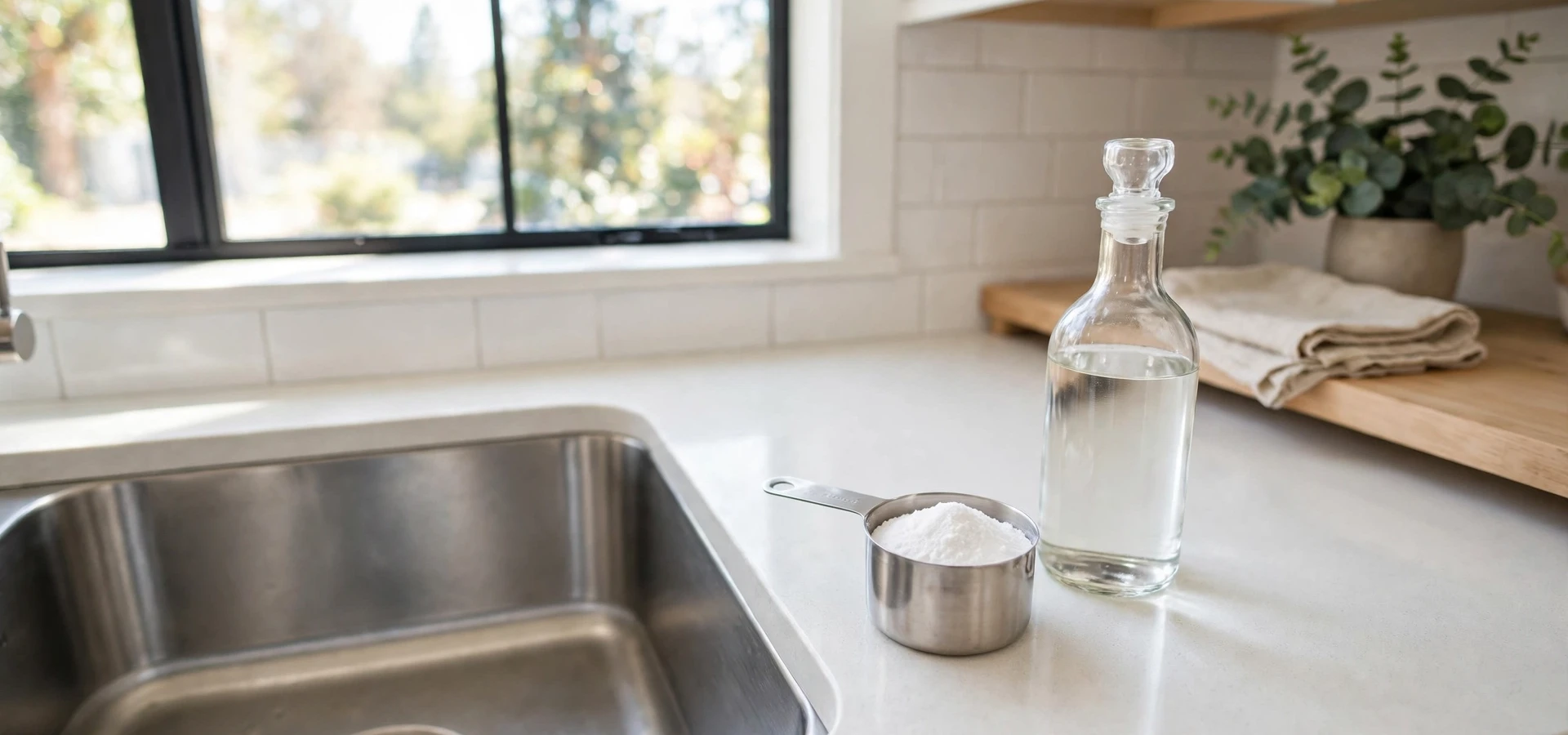
Pour about half a cup of baking soda straight down the drain. Use a spoon to push it into the opening if some sits on the surface.
- 3
Add the vinegar
Pour in one cup of white vinegar and plug the drain with a stopper or wet rag so the foam works down into the pipe instead of up at you. Leave it for 15 to 30 minutes.
- 4
Flush with hot water
Run hot tap water for a full minute. Hot from the tap is enough. Use boiling water only on a metal pipe, because it can soften a PVC trap or loosen a glued joint.
What it helps and what it does not
Match the tool to the clog, and you save yourself a wasted weekend.
Slow kitchen sink
Grease and soap film are the usual culprits. The mix can help, and a follow-up flush of hot water carries the loosened film away.
Bathroom sink or tub
Hair and soap knot into a tangled mat just below the stopper. Pull it out by hand or with a plastic barbed strip. Foam alone leaves most of it in place.
Smelly drain
A mild odor often comes from film inside the trap or the overflow opening. The mix can freshen it, though a dry trap or a vent problem needs a different fix.
Full, standing water
Do not pour anything down. There is nowhere for the mixture to go, and you will end up with a basin of fizzing, dirty water.
Several drains gurgling
That is a shared line problem. A home remedy cannot reach a blockage further down the house drain.
Never combine it with a chemical cleaner
If you have already poured a store-bought drain opener into the pipe, do not add vinegar or anything else on top of it. Mixing acids and bleach-based products can release harmful fumes, and splashing a caustic liquid on skin or eyes is dangerous. Wear gloves and eye protection for any drain work, and tell the plumber what you used before they open the trap.
Pick the right fix for the symptom
Different symptoms point to different depths in the pipe.
| What you see | Likely depth | First move | Call a pro when |
|---|---|---|---|
| One sink is slow | Trap or branch | Plunger, then the mix | It returns within days |
| Tub water pools at your ankles | Stopper area | Pull hair, then flush | Water stays after hair is out |
| Kitchen sink and dishwasher back up | Branch line | Plunger, check disposal | Dishwasher water appears in the sink |
| Toilet and tub gurgle together | Main line | Stop using water | Right away |
| Water at the lowest floor drain | Main line or lateral | Stop using water | Right away, any hour |
Mistakes that make a clog worse
Pouring grease down the drain is the first one. Hot grease liquefies, then hardens a few feet down the pipe and traps everything behind it. Wipe pans with a paper towel and put the waste in the trash.
The second is using a plunger on a sink that has a disposal or a double bowl without blocking the other side. The pressure just moves the water between bowls. Plug the second drain with a wet rag first.
The third is repeating the mix every day. If it worked once and the drain slows again in a week, the clog has regrown, and you need to remove it instead of treating the symptom. A cable or a hydro jetting pass reaches what a pour-in cleaner cannot.
Habits that keep drains moving
Most clogs are a build-up, not a surprise.
- Fit a mesh strainer over every shower and tub drain, and empty it weekly.
- Scrape plates into the trash before rinsing. Even a thin film of oil adds up.
- Run hot water for a full minute after the dishes, to carry soap and fat along.
- Never flush wipes, even ones marked flushable. They knot in the pipe and collect hair and paper.
- Pour the baking soda and vinegar mix once a month on slow drains as a light clean-out.
- Pay attention to sounds. A gurgle after a flush is a warning that air is struggling to pass a partial blockage.
When to put the vinegar down and call
Call a plumber if the plunger fails, if the drain is clogged again within a few days, or if you hear gurgling from drains that are not near the blocked one. Those are signs the blockage is deeper than a trap.
Water coming up in a basement floor drain or tub is the most urgent sign. Stop using water in the house, because every flush or load of laundry sends more down the line. You can call our 24/7 line for sewer line cleaning when a main line is the likely cause.
Covington, KY: what to know before you start
Older parts of Covington and Newport are served by a combined sewer system, which carries wastewater and storm water in the same pipe, according to Sanitation District No. 1 (SD1). Overflows from that kind of system can back up basements. If water comes up in a lowest drain after heavy rain, a bottle of vinegar is not the answer, so stop using water and treat it as a sewer matter.
Responsibility also matters here. The property owner owns and maintains the private sewer lateral, the pipe from your building to the connection with SD1's sewer. Signs of a defect include repeated blockages, backups, overflow, and sinkholes. SD1 has had a program for defective laterals under public roadways, but availability has to be confirmed, so call SD1 at 859-578-7450 before assuming it applies to you.
Source type: [SD1] Sanitation District No. 1 combined sewer and private lateral information, [CITY] 2015 notice on defective laterals
Frequently asked questions
Fifteen to thirty minutes is enough. The foam is short-lived, and extra time does not add much. Flush with hot water afterward to rinse away what loosened.
A monthly pour on a slow drain is fine for most metal and plastic pipes. If you need it weekly, a clog is regrowing, and drain cleaning with a cable gets to the cause.
The mix is mild and generally gentle on pipes. Avoid boiling water on plastic traps. If your property uses a septic system instead of a sewer connection, ask a septic specialist about what is safe to pour in.
A dry trap, a dirty overflow opening, or a vent problem can all cause odor. If the smell returns right after you clean, a plumber should check the trap seal and the vent line.
Most plumbers avoid them. Caustic cleaners can sit in a blocked pipe, harm a trap, and make a plumber's work riskier. Never mix them with vinegar or any other product.
Yes, our 24/7 line is open for drains that are backing up, especially when water is rising in a tub or floor drain. Same-day appointments are available when the clog is not urgent.
Stop using water, keep people away from wet electrical items, and call a plumber. Covington's older areas share a combined sewer system, and heavy storms can push flow back toward homes. Report sewer emergencies to SD1, and have a licensed plumber check your own lateral as well. Neighbors in Park Hills and Taylor Mill can call the same line.