
Three kinds of water, three different fixes
A wet basement can come from groundwater pushing through the floor and walls, from a sewer or drain backing up, or from a leaking pipe. Each looks alike on a concrete floor and each is fixed differently, so the first job is to name the source.
Waterproofing proper deals with the first kind. It gives groundwater a path to a sump pit and a pump before it reaches your finished space, and a plumber can tell you honestly whether that is your problem.
Wet floor after rain, white powder on the walls, a musty smell?
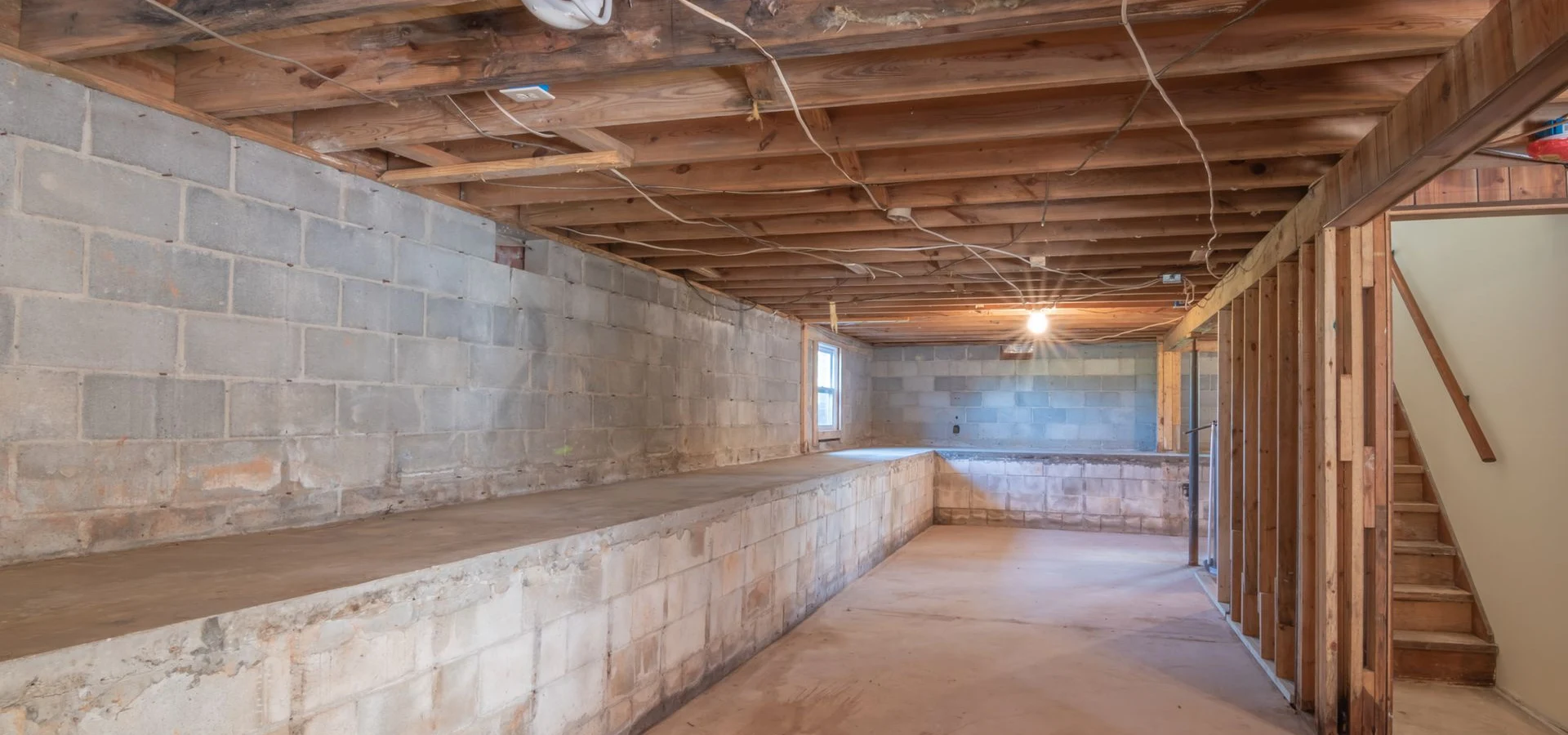
Those signs usually mean water is moving through the foundation, not the plumbing. Dampness that follows a storm, white mineral crust on block walls, and a floor that stays cool and clammy all suggest groundwater.
The technical name for the fix is interior drainage, often called basement waterproofing, and it combines a perimeter drain, a sump pump and sealing where needed.
How to tell groundwater from a sewer backup or a pipe leak
| Clue | Groundwater | Sewer backup | Plumbing leak |
|---|---|---|---|
| Timing | After rain or snowmelt | During heavy storms or when drains run | Any time, even in dry weather |
| Where | Wall base, cracks, floor edges | Floor drain, toilet, lowest fixture | Near a pipe or a stain on the ceiling |
| Water look | Clear, may be rusty | Gray or dark, with an odor | Clear, from a supply line |
| Meter test | Meter stays still | Meter stays still | Meter moves with everything off |
Find the source before you pay for a fix
Call and describe where, when and how the water shows up.
What an interior system includes
Perimeter drain tile
A channel cut along the footing collects water at the wall base and carries it toward the sump.
Sump pit and pump
The pit holds the water, and the pump lifts it out and away from the house.
Wall sealing and crack injection
Cracks and wall joints are sealed to slow seepage, though sealing alone seldom handles heavy water.
Battery backup
A backup pump keeps the system working when storms cut the power.
Dehumidification
Once the water is controlled, controlling humidity protects stored items and finishes.
How an interior system goes in
- 1
Diagnose
Check the meter, the drains and the walls to confirm groundwater is the source.
- 2
Open the edge
Cut a trench in the floor along the walls that need drainage and set it with gravel.
- 3
Set the pit and pump
Install the sump pit at the low point and run a discharge line away from the house. Our sump pump repair page explains pump faults.
- 4
Close the floor
Pour new concrete over the drain, test the system with water and check the discharge.
What interior systems cannot do
An interior drain handles groundwater seeping through the foundation. It cannot hold back a river. The Ohio at Cincinnati crested at a record 80.0 feet on January 26, 1937 against a flood stage of 52 feet, and no sump or drain tile can stop water at that level from entering. Flood protection is a separate subject, and a backup valve or raising equipment may matter more.
Low-cost steps to try before any excavation
Many damp basements improve with outdoor changes.
- Clean gutters and extend downspouts several feet away from the foundation.
- Check that soil slopes away from the walls rather than toward them.
- Look for cracked or disconnected downspout lines that dump water at the base.
- Move stored items off the floor and onto shelves.
- Keep a note of when and where the water shows up, with photos.
Why Covington basements get wet
Covington sits where the Ohio and Licking Rivers meet, and rain soaks into ground that sits close to river level in many places. In wet seasons that raises the water table, which is why basement water tends to follow storms.
Older parts of the city, along with Newport, have a combined sewer that carries wastewater and storm water in the same pipe, and SD1 says overflows can cause basement backups. If your water arrives through a drain, see sewer line cleaning and call SD1 to report it, because waterproofing will not stop that.
We also serve Fort Wright and nearby towns, and the diagnosis always comes before any plan to dig.
What shapes the price of basement waterproofing
Frequently asked questions
Groundwater is probably seeping through the walls or the floor-wall joint. A plumber will check gutters, grading, the sump and the drains before recommending an interior system.
Sewer water is gray or dark and smells, and shows up at floor drains or toilets. Groundwater is clear and shows at wall bases. Call SD1 if you suspect a public sewer overflow.
No. Interior drainage handles seeping groundwater. It cannot hold back rising river water, so ask about other flood measures if you live near the Ohio or Licking.
It depends on wall length, foundation type, the sump setup, the discharge path and what must be moved. You get a clear price before work starts, and the dispatcher can explain each factor.
Yes. A meter that moves with every fixture off points to a leak, and the leak detection team can find it before you spend on drainage.
Tell the landlord in writing and photograph the damage. Owners and managers can call to plan a diagnosis and a fix.