
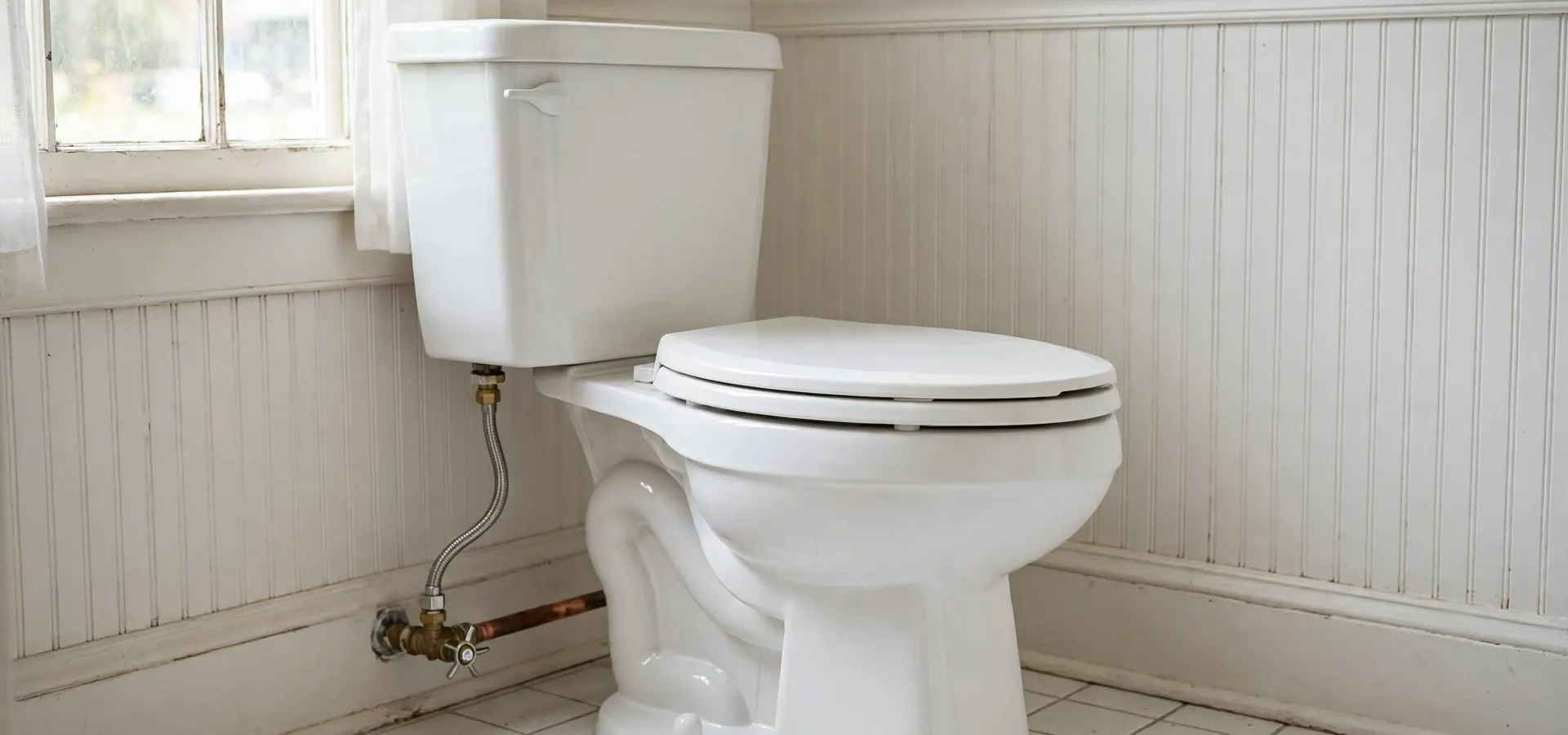
The short version of installing a toilet
To install a toilet, shut off the water, drain and lift the old bowl, scrape the flange clean, set a new wax ring, lower the new bowl onto the closet bolts, tighten it down evenly, then connect the supply line. Most swaps take two to three hours. The part that decides whether the job lasts is the flange, the ring of metal or plastic on the floor that the bowl bolts to.
If the flange is cracked, rusted through, or sitting below the finished floor, a new toilet will rock and leak no matter how carefully you set it. Check that first, and the rest of the job is straightforward.
Gather these before you shut the water off
Running to the hardware store with the bathroom out of service is the usual way a one-afternoon job becomes a two-day one.
- Measure the rough-in, the distance from the wall to the center of the floor drain. Twelve inches is common, but ten and fourteen exist.
- A new wax ring, or a wax-free seal if you prefer, plus a new set of closet bolts.
- A braided stainless supply line, 3/8 inch, long enough to reach without a tight bend.
- A putty knife, a bucket, a sponge, old towels, and a few rags to plug the drain opening.
- Plastic shims in case the floor is slightly out of level.
- A helper. A full toilet weighs 60 to 100 pounds, and the bowl alone is awkward to lift.
Pulling the old toilet and setting the new one
Work slowly and never crank on porcelain. It cracks without warning.
- 1
Shut off and drain
Close the stop valve behind the toilet by turning it clockwise. Flush, hold the handle down, and sponge out what remains in the tank and bowl. Disconnect the supply line and keep a towel under the fitting.
- 2
Lift and inspect the flange
Pop the bolt caps, remove the nuts, and rock the bowl gently to break the old seal. Lift straight up and set it on newspaper. Stuff a rag into the drain opening to block sewer gas, then scrape every trace of old wax off the flange.
- 3
Set the ring and the bowl
Install new closet bolts in the flange slots and press the new wax ring onto the bottom of the bowl or the flange, depending on the product. Lower the bowl straight down over the bolts in one motion. Do not lift it again once it touches the ring.
- 4
Tighten, connect, test
Press down with your body weight, then thread the nuts on by hand. Tighten each side a quarter turn at a time, alternating, until the bowl is firm. Connect the supply line, open the valve slowly, and flush five times while checking the base and the connections for moisture.
What the flange tells you
The flange is the hidden part of every toilet job. Here is what a flashlight and a few seconds of looking can reveal.
Flange sits below the floor
After a tile or vinyl upgrade, the ring can end up lower than the surface. The wax ring cannot bridge the gap, so the seal leaks. A thicker ring or a flange extender solves it.
Cracked or broken ring
Plastic flanges crack and cast iron ones rust. A repair ring screwed to the subfloor works only if the floor underneath is solid.
Bolt slots are chewed up
Stripped slots let the bowl shift. A rocking toilet breaks its wax seal over time, which is how a slow leak starts.
Soft or stained subfloor
Press the area with a screwdriver tip. If it sinks, the wood is rotted from a long, quiet leak. Stop the install and have the floor repaired first.
Wrong rough-in
A bowl built for a 12-inch rough-in will not sit properly on a 10-inch drain. Measure again before you buy.
DIY swap or call a plumber
The like-for-like swap is a fair DIY job. Moving or adding a toilet is a different category.
| Situation | Reasonable DIY? | Why |
|---|---|---|
| Same spot, same rough-in | Yes | Wax ring, supply line, and care are the whole job |
| Flange is cracked or rusted | Maybe | Repair rings help only on a solid floor |
| Subfloor is soft or stained | No | Rot has to be cut out and rebuilt first |
| Moving the toilet or adding a bathroom | No | New drain and vent work, and permit rules apply |
| Slow drain or gurgling after install | No | Points to a venting or drain problem behind the wall |
| Older cast iron closet bend | No | Corroded bends can fail when disturbed |
Mistakes that cause the call-back
Over-tightening is the classic. Porcelain does not flex, and a bowl cranked down on one side can crack at the base months later. Snug and even beats tight.
Reusing the old wax ring is the second. Wax does not spring back after it has been compressed, and a bowl that has been lifted and reset on the same ring often weeps at the base. A new ring costs very little compared with a stained ceiling underneath.
Skipping the level check comes third. A bowl that leans forward or sideways stresses the seal and the tank bolts. Shim the low corner, then trim the shims flush after the caulk line is set.
Safety notes for a bathroom job
Wear gloves. Old wax, residue, and the water in the trap carry bacteria, and a spent bowl is not clean even when it looks it. Wash up afterward and keep children and pets out of the room until the floor is dry.
Never use a power tool near standing water without a GFCI-protected outlet. If you smell gas anywhere in the home, leave the building and call your gas utility or 911 before you do anything else, and call a plumber afterward.
When the install is bigger than a swap
If the new toilet goes in a different spot, the drain and vent have to move with it. That is new work, not a replacement, and the Kentucky Division of Plumbing lists moving fixtures among the jobs that need a permit. Permit rules vary, so ask the Division of Plumbing or the local plumbing inspector before you cut anything.
A licensed plumber can pull the permit, run the drain at the right slope, and arrange for any covered work to be inspected before it is closed up. For planned jobs like this one, new fixture and bathroom installation is the better route than a patched-together weekend.
A toilet that still misbehaves afterward
A new bowl should flush cleanly with one push. If it runs, whistles, or leaves water around the base, the fault is usually a fill valve, a flapper, or a seal that did not seat. Our guide to fixing running and leaking toilets covers those.
Gurgling from other drains when you flush is a different signal. It suggests the vent or the drain line is partly blocked, and a new toilet will not cure it.
Covington, KY: what to know before you start
Covington's population peaked at 65,252 in 1930, so a large share of the older housing was built or updated around that era. Bathrooms in homes that age can have cast iron closet bends, lead or galvanized fittings nearby, and wood subfloors that have seen decades of small leaks. If your old toilet sits on a worn flange, plan to inspect the floor and the pipe under it before you buy a new bowl.
If you plan to move the toilet or add a bathroom, the Kentucky Division of Plumbing lists moving fixtures as work that needs a plumbing permit. Permit rules vary, so ask the Division of Plumbing or the local plumbing inspector. Work buried in a wall or under a floor has to be inspected before it is covered, so do not close anything up until that is settled.
Source type: [W] Wikipedia/Census-derived page for the 1930 peak population, [DHBC] homeowner packet for fixture-moving permits and pre-cover inspection
Frequently asked questions
A plain swap in the same spot takes two to three hours for a first-timer. Add time if the flange needs repair or the floor needs patching. Moving the toilet to a new location is a multi-day project.
Yes. Wax compresses to the shape of the bowl and flange and does not rebound. If you lift a toilet even once, replace the ring before setting it again.
The floor is likely uneven or the flange sits low. Shims under the base fix a slight wobble. A bowl that rocks a lot may point to a damaged flange, and a licensed plumber should look at it before the seal fails.
Check the rough-in, the distance to the side walls, and the door swing. Most bowls need about 15 inches from the center of the drain to the nearest wall. A compact elongated model often fits where a full-size one will not.
It can be. Shut the stop valve, stop flushing, and dry the floor. A steady leak soaks the subfloor and can reach the ceiling below. You can call our 24/7 line for urgent leaks, and leak detection helps when the source is unclear.
It depends on the fixture, whether the flange or subfloor needs repair, and whether any drain work is involved. A licensed plumber gives you a clear price before work starts, whether you live in Covington or in Fort Mitchell. Ask for the fixture, labor, and any repair items to be listed separately.
It can. Many Covington homes date to the years around the 1930 population peak, so a plumber may find old cast iron under the floor or a flange that has rusted. Older river-side homes in Ludlow share the same concern. It is worth an inspection before you pick a new bowl.