
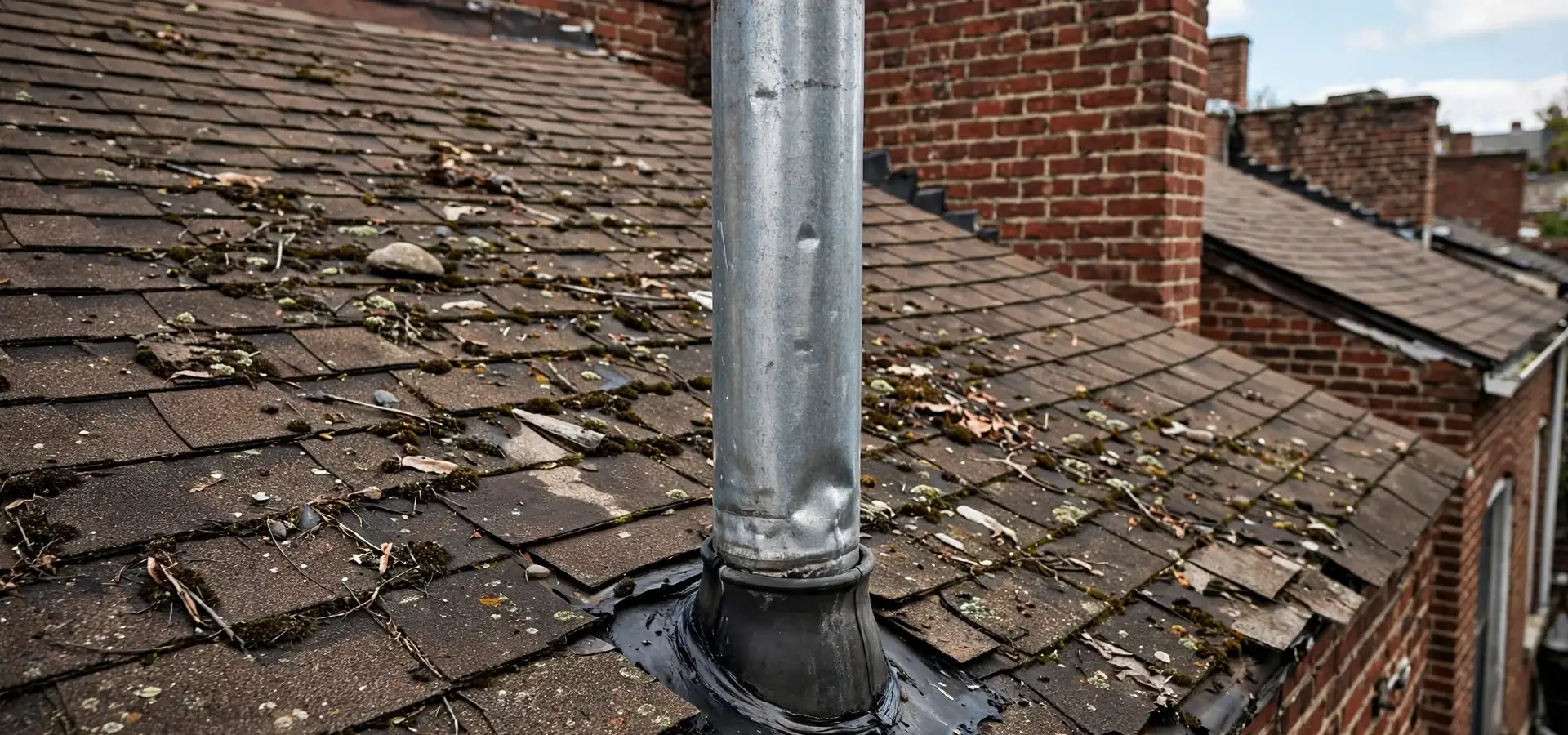
What a clogged vent does to your drains
Every drain in your house needs air. The vent pipe, which usually exits through the roof, lets air in behind the water so it can flow, and lets sewer gas out. When the vent is blocked, wastewater has to pull air through the trap instead, and you hear it as gurgling.
The classic signs are a toilet that glugs when the tub drains, slow drains on several fixtures at once, and a sewer smell in the bathroom. If only one sink is slow, the clog is probably in that drain, not the vent. If two or three fixtures act up together, think vent first.
Symptoms that point to the vent
No single sign proves a vent clog, but a cluster of them does.
Gurgling from a distant drain
Run the washing machine and listen at the tub or toilet. Air bubbling up there means the system is pulling air from the wrong place.
Slow drains in several rooms
A partial blockage low in the sewer slows everything too, so look at the pattern. Vent problems often get better when the wind changes or a door opens.
Sewer odor indoors
A dry or siphoned trap lets gas in. A vent that cannot relieve pressure can pull water out of the trap and leave the opening unsealed.
Toilet that bubbles or flushes weakly
A toilet that flushes slowly but is not clogged is a good clue. Test it with a plunger. If that fails to help, the problem may be higher up.
Trouble only in cold snaps
Frost can narrow a vent opening on a very cold night, and a pipe that works by noon may point to a frost cap rather than a solid blockage.
A ground-level test before anyone climbs a ladder
These four checks cost nothing and tell you whether the vent deserves a closer look.
- 1
Run one fixture at a time
Fill a sink, then release it and listen. Do the same at the tub and the toilet. Note which fixtures gurgle and which do not.
- 2
Flush while watching the nearest drain
If a flush makes the shower drain bubble, the air has nowhere else to go. Write down the fixture pairs so you can describe them on the phone.
- 3
Check from the yard
Look up at the roof with binoculars. A vent stack should have an open top. Leaves, a nest or a stuffed screen cap are visible from the ground more often than people expect.
- 4
Rule out the obvious clog
Plunge the slow fixture. If it clears, the vent was not the cause. If it clears for an hour and relapses, the line or the vent needs a real look.
What blocks a vent in the first place
Debris is the usual suspect. Leaves, seed pods and bird or squirrel nests fall into the open pipe, and a stack with a wide opening collects them faster than one with a mesh cap. Over several seasons the blockage packs down into something that does not wash out.
Other causes are less common. A tennis ball or toy dropped by a child, wasp nests, ice caps in very cold weather and a poorly installed vent that dips or sags and traps condensation can all choke the pipe. In an older house, the vent may also be partly crushed or capped after a remodel and nobody remembers it.
DIY check versus a plumber's call
Use this table to decide who should handle each step.
| Step | Homeowner | Plumber |
|---|---|---|
| Listen for gurgling at fixtures | Yes | Yes, with diagnosis |
| Look at the roof opening from the ground | Yes | Yes |
| Climb onto a steep or wet roof | No | Yes, with fall protection |
| Flush the vent with a garden hose | Only from a safe low roof | Yes |
| Run a drain camera or cable | No | Yes |
| Re-route or add a vent | No | Yes, and permit rules apply |
Before you climb: safety that matters
Most injuries from vent work happen on the roof, not in the pipe.
Stay off wet or icy roofs
Frost and dew make shingles slick. If the roof is steep, tall or wet, leave the climb to a pro with proper harness gear.
Never lean over the ledge
Reaching from a ladder to the roofline is how people fall. Keep three points of contact, and have someone hold the base.
Watch for power lines
Service drops often cross near vent stacks. Metal tools and a long hose nozzle are bad near a live line.
Smell gas? Leave first
A rotten-egg smell is a different problem than sewer gas. If you smell natural gas, leave the building and call your gas utility or 911 before anything else.
How a plumber clears a vent
The usual approach is simple. From the roof, the plumber looks into the stack, then runs a small drain cable or flushes with water from a hose to push debris down and out through the drain line. If water backs up or the blockage is out of reach, they may use a camera to see what is stuck.
A clear vent should let water drain from the roof opening with no pooling. Once the pipe is open, a good plumber caps it with a proper vent cover or screen and points out any sagging runs that will collect water again. That step prevents a repeat call, so ask about it.
Mistakes that make vent problems worse
Treating it as a drain clog only
Chemical drain cleaners do nothing for a vent and add risk to old pipes. If the vent is the issue, the chemicals just sit in the trap.
Stuffing a hose in and turning it on high
Blasting water down a vent that is fully blocked can push the clog into a bend and make it denser. Start with low flow.
Capping the vent to stop smell
Closing the opening traps gas and worsens drainage. Vents must stay open to outside air.
Ignoring a persistent gurgle
Over time, a starved vent can siphon traps dry and let sewer gas into the home. That is a health matter, not only a nuisance.
Rule of thumb
If two or more fixtures that sit on different branch lines gurgle at once, the problem is far more likely to be the vent or the main drain than a clog in one fixture.
Covington, KY: what to know before you start
Covington's housing runs old. Its population peaked at 65,252 in 1930, and many houses built in that era have had bathrooms and kitchens added over the decades. Every added fixture has to be vented, and a bathroom added to an older house is a common place to find a vent that is undersized or shared. If your gurgling started after a remodel, say so when you call.
Plumbing work in Kentucky falls under the Kentucky State Plumbing Code, required by KRS 318.130. Adding or changing vents is plumbing work, and permit rules vary, so ask the Kentucky Division of Plumbing or the local plumbing inspector before you start. Work that is covered by walls or concrete must be inspected before it is closed up, so keep drywall off until you know.
Source type: W (Census-derived population), DHBC (Kentucky Division of Plumbing, KRS 318.130, inspection before covering)
Frequently asked questions
Watch the pattern. A vent problem shows up as gurgling and slow drains on several fixtures, often better on windy days. A sewer clog usually backs up the lowest drain first. If you are unsure, call a drain cleaning plumber who can camera the line.
From the ground you can check the opening. Going onto a roof, especially a steep or wet one, is the risky part. Many people stop at a ground-level look and let a plumber handle the roof.
Not directly, but it can pull water out of traps and let sewer gas in, and it makes drains work harder. Left alone for long, it also makes clogs more likely.
Usually not, unless drains are backing up or you smell strong sewer gas. Our 24/7 emergency line takes the urgent calls, and same-day appointments are available when the schedule allows.
Every fixture needs proper venting, whether through its own stack or a code-approved connection. Ask your plumber about new fixture installation and check permit rules with the Division of Plumbing.
It can happen anywhere a vent stack has an open top. Homeowners in Fort Mitchell and Taylor Mill with mature trees nearby should check the opening each fall.
Older Covington houses often had fewer fixtures than they do now, and an added bathroom can overload the original vent. A plumber can check whether the new fixture shares a vent or needs its own. Mention the remodel on the call.